
How the US Stock Market Shapes Global Finance in 2026
The United States stock market remains the central nervous system of global finance in 2026, even as capital, technology, and regulation continue to evolve across continents. For readers of BizFactsDaily, which closely follows shifts in artificial intelligence, banking, crypto, employment, and stock markets, the story of Wall Street is not simply about indices and tickers; it is about how decisions made in New York resonate in London, Frankfurt, Singapore, Shanghai, São Paulo, and beyond, influencing corporate strategy, government policy, household wealth, and long-term innovation.
By 2025, the combined market capitalization of the New York Stock Exchange (NYSE) and the Nasdaq accounted for more than 40 percent of global equity value, according to data from sources such as the World Federation of Exchanges and broad market analyses. That dominance has persisted into 2026, even as other regions attempt to deepen their own capital markets. The US market's scale, liquidity, and regulatory infrastructure have made it not just a mirror of American economic strength, but a primary engine of global capital formation and a transmission channel for both growth and risk. For professionals monitoring developments through resources like BizFactsDaily's coverage of the global economy and stock markets, understanding this influence has become a strategic necessity rather than an academic exercise.
The Unmatched Scale and Benchmark Role of US Equity Markets
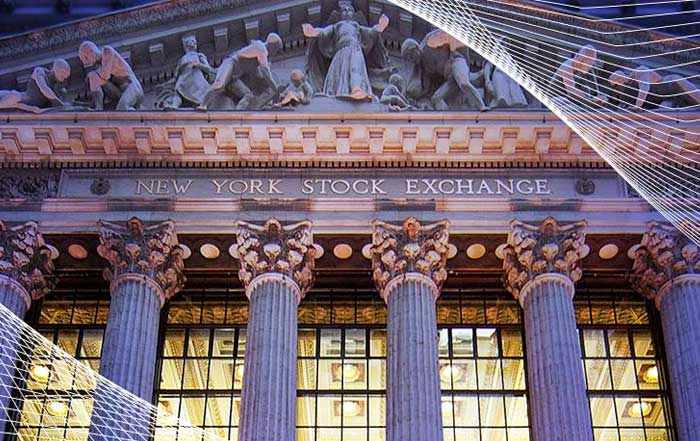
The NYSE remains the world's largest stock exchange by market capitalization, with the Nasdaq close behind, powered by its concentration of high-growth and technology-oriented companies. Together, they overshadow other major exchanges such as the London Stock Exchange, Deutsche Börse, and Hong Kong Exchanges and Clearing (HKEX), which, while significant within Europe and Asia, still represent a fraction of US market value. Data from platforms like the World Federation of Exchanges and the Bank for International Settlements consistently illustrate how US exchanges dominate global equity listings, trading volumes, and institutional participation.
The presence of global titans such as Apple, Microsoft, Amazon, NVIDIA, Meta Platforms, and Tesla on US exchanges means that Wall Street has become a proxy not only for American corporate health but also for global technology and consumer trends. Indexes such as the S&P 500, Dow Jones Industrial Average, and Nasdaq Composite are used by asset managers in the United States, Europe, Asia, and the Middle East as primary benchmarks for portfolio performance. Pension funds in Canada, sovereign wealth funds in the Gulf, and insurance companies in Germany routinely align their strategies with these indices, while central banks and policymakers track them as real-time indicators of financial conditions. Analysts who follow BizFactsDaily's business and investment sections typically treat S&P 500 movements as a central reference point for cross-border asset allocation decisions.
Wall Street as the World's Primary Risk Barometer
Over the past two decades, the US stock market has become the most closely watched global risk indicator, a role reinforced during the 2008 financial crisis, the 2020 COVID-19 shock, and the inflationary volatility of 2022-2023. When Wall Street experiences a sharp sell-off, risk aversion tends to rise almost instantly across global markets. Equity indices in the United Kingdom, Germany, Japan, South Korea, and Australia often open lower in response to overnight declines in New York, while yields on safe-haven assets such as US Treasuries and German bunds compress as capital seeks safety.
The influence of US monetary policy, particularly the decisions of the Federal Reserve, deepens this risk-barometer function. Changes in policy rates, quantitative tightening or easing, and forward guidance are rapidly reflected in equity valuations, credit spreads, and currency markets worldwide. Reports from institutions like the Federal Reserve and the International Monetary Fund are therefore scrutinized by market participants from Singapore to Stockholm, as they signal not only the cost of capital in the United States but also global financial conditions. Readers who follow BizFactsDaily's coverage of banking and employment trends understand that shifts in US yields can influence hiring decisions, wage growth, and investment pipelines across multiple regions.
Technology, Artificial Intelligence, and Global Innovation Leadership
One of the most decisive dimensions of US market influence lies in its leadership in technology and artificial intelligence. The Nasdaq has become synonymous with innovation, hosting companies such as Alphabet (Google), Amazon, NVIDIA, Meta Platforms, and a wide range of software, semiconductor, cloud, and biotech firms whose products underpin digital economies worldwide. Their valuations and capital-raising capacity on US exchanges shape the direction of global innovation, from AI research hubs in Canada and the United Kingdom to robotics clusters in Japan and semiconductor supply chains in South Korea and Taiwan.
The acceleration of generative AI and machine learning since 2023 has heightened this dynamic. Capital expenditure disclosures from leading US technology firms, often analyzed in detail by outlets like MIT Technology Review and McKinsey & Company, show massive investments in data centers, AI chips, and cloud platforms. These spending patterns, reflected in the stock prices of companies such as NVIDIA and Advanced Micro Devices, influence where startups in Germany, France, Singapore, and India choose to build their products and which ecosystems venture capitalists prioritize. BizFactsDaily's own coverage of artificial intelligence and technology frequently highlights how Wall Street's appetite for AI-driven growth affects global hiring, research partnerships, and cross-border M&A activity.
International Capital Flows and the Magnetism of US Markets
The US stock market's depth and perceived safety have made it a magnet for international capital from institutional and retail investors alike. Sovereign wealth funds in Norway, Saudi Arabia, and Singapore, pension funds in Canada, the Netherlands, and Australia, and family offices in Switzerland and Hong Kong routinely allocate substantial portions of their portfolios to US equities. Analyses by organizations such as the OECD and the World Bank indicate that foreign holdings of US equities have crossed trillions of dollars, underscoring the integration of global savings into Wall Street.
Several factors underpin this magnetism: the rule of law and relatively transparent regulatory framework, the dominant role of the US dollar, the presence of sophisticated market infrastructure, and a long track record of innovation and shareholder returns. US corporate governance standards, enforced by bodies such as the Securities and Exchange Commission (SEC), are often perceived as more predictable than those in many emerging markets, which further encourages cross-border investment. For BizFactsDaily readers tracking global and investment themes, this foreign participation also represents a channel through which global shocks are imported into US markets and, conversely, through which US volatility is exported to foreign portfolios.
Spillovers to Emerging Markets and the Vulnerability of Peripheral Economies
The influence of the US stock market is particularly acute in emerging and frontier markets across Asia, Africa, Latin America, and Eastern Europe. When Wall Street rallies, capital often flows out of higher-risk markets and into US assets, especially when the rally is accompanied by rising US interest rates. This "risk-on, risk-off" dynamic has been documented in various studies by the Bank for International Settlements and the IMF, which show how changes in US financial conditions correlate with capital inflows and outflows in countries such as Brazil, South Africa, Turkey, Malaysia, and Thailand.
The 2013 "taper tantrum" and the tightening cycle of 2022-2023 illustrated how sensitive emerging market currencies and bond yields are to shifts in US monetary policy and equity valuations. When investors anticipate higher returns and lower perceived risk in the United States, they often unwind positions in local equities and debt in these economies, leading to currency depreciation, rising borrowing costs, and, at times, forced policy tightening. This can slow growth, complicate fiscal planning, and increase social pressures, especially where governments have significant dollar-denominated debt. BizFactsDaily's readers, who often evaluate sustainable growth models and business environments, recognize that this dependency on Wall Street's cycles can make long-term planning in emerging markets more challenging and more vulnerable to external shocks.
The US Dollar, Currency Markets, and Global Liquidity
The US stock market's global impact is inseparable from the central role of the US dollar. Because the dollar remains the world's primary reserve and invoicing currency, swings in US equities often coincide with shifts in demand for dollar assets. When Wall Street is buoyant, global investors typically increase their exposure to US securities, which can drive up the dollar's value against currencies such as the euro, yen, and pound. This has direct consequences for export competitiveness in Europe, Japan, and the United Kingdom, as well as for trade-dependent economies in Asia and South America.
Central banks and finance ministries monitor these dynamics through data and analysis from sources such as the European Central Bank and the Bank of England. A stronger dollar can raise the cost of servicing dollar-denominated debt in countries from Argentina to Indonesia, increasing the risk of balance-of-payments strains. Conversely, when US equities fall and investors seek alternative safe havens, currencies like the Swiss franc and Japanese yen may appreciate, introducing another layer of complexity for policymakers in Switzerland and Japan. BizFactsDaily's focus on the economy and banking provides readers with a framework to understand how Wall Street's performance feeds into currency volatility, trade balances, and cross-border capital controls.
Interdependence with European Financial Centers
The relationship between Wall Street and European markets is deeply rooted in trade, investment, and regulatory alignment. Exchanges such as Euronext, Deutsche Börse, and the London Stock Exchange Group begin their trading day by digesting the previous session's moves in New York and the latest after-hours earnings releases from major US corporations. Futures markets in Europe, which trade nearly around the clock, provide an early indication of how US sentiment will shape European opening prices, especially for sectors like banking, industrials, and technology.
Corporate earnings from US multinationals including Apple, Coca-Cola, Johnson & Johnson, and JPMorgan Chase carry significant weight for European suppliers and partners. Positive earnings surprises often lift European component manufacturers, logistics firms, and marketing agencies that depend on US demand, while negative surprises can trigger broad-based sell-offs. Cross-listing, American Depositary Receipts (ADRs), and transatlantic M&A activity further entwine valuations, as many European companies seek access to US capital markets to broaden their investor base. Regulatory and tax changes in Washington, analyzed frequently by organizations such as the OECD, can therefore influence European corporate structures and capital budgeting decisions. BizFactsDaily's global and business coverage often emphasizes how this transatlantic interdependence shapes the strategies of firms headquartered in Germany, France, Italy, Spain, and the Netherlands.
Asian Financial Hubs and the Wall Street Pulse
In Asia, the linkage with Wall Street is equally strong, particularly in advanced economies and regional financial centers. The Nikkei 225 in Japan, the KOSPI in South Korea, and major indices in Hong Kong, Singapore, and Australia frequently mirror shifts in US technology and cyclical sectors, given the region's critical role in global manufacturing and supply chains. When US investors rotate into semiconductors, electric vehicles, or green energy, companies in Taiwan, South Korea, China, and Japan often experience parallel valuation gains.
China's position is more complex. While the country has expanded its domestic exchanges in Shanghai and Shenzhen, many of its globally oriented firms, especially in e-commerce, fintech, and electric vehicles, have historically relied on US listings to access international capital. Ongoing regulatory scrutiny from both US and Chinese authorities, including audit requirements and data-security concerns, has led to some delistings and secondary listings in Hong Kong, but Wall Street remains a critical reference point for global investors assessing Chinese corporate risk. Regional policymakers and investors, drawing on analysis from organizations such as the Asian Development Bank, track how US equity valuations influence capital flows into Southeast Asia, India, and Japan. BizFactsDaily's readers with interests in technology and innovation recognize that this interplay determines where new factories are built, where R&D centers are located, and how supply chains are diversified.
The Convergence of Wall Street and Digital Assets
The rise of cryptocurrencies and tokenized assets has added a new layer to Wall Street's global reach. What began as a largely separate ecosystem has, by 2026, become increasingly intertwined with traditional finance. Major US institutions such as BlackRock, Fidelity, and Goldman Sachs now offer products linked to Bitcoin, Ethereum, and other digital assets, while US-regulated spot Bitcoin and Ethereum exchange-traded funds (ETFs) have opened new channels for institutional and retail participation. As a result, sharp moves in the Nasdaq and broader risk sentiment often correlate with volatility in crypto markets.
Regulatory decisions by the SEC and the Commodity Futures Trading Commission (CFTC) have global repercussions, affecting not only US-based exchanges and custodians but also crypto hubs in Switzerland, Singapore, Dubai, and Hong Kong. Guidance on custody, stablecoins, and market structure influences how banks and fintech firms in Europe, Asia, and Latin America design their digital-asset offerings. For BizFactsDaily's audience following crypto and investment, this convergence underscores that digital assets can no longer be analyzed in isolation; they are part of the same risk ecosystem shaped by Wall Street's liquidity, regulation, and investor psychology.
Long-Term Investment Trends: ESG, ETFs, and Private Capital
Wall Street has also been a key driver of structural investment trends that now define global capital markets. The rise of environmental, social, and governance (ESG) investing, accelerated by commitments from firms such as BlackRock, Vanguard, and State Street, has pushed corporations worldwide to enhance disclosures, reduce carbon footprints, and formalize governance frameworks. Research from organizations like the UN Principles for Responsible Investment and the Task Force on Climate-related Financial Disclosures demonstrates how ESG mandates originating in US and European capital markets have reshaped corporate behavior in Asia, Africa, and South America. BizFactsDaily's sustainable coverage highlights how these trends affect financing conditions for sectors ranging from energy and transport to real estate and agriculture.
At the same time, the proliferation of exchange-traded funds (ETFs), many of them launched and scaled in the United States, has transformed portfolio construction worldwide. Investors in Canada, the United Kingdom, Germany, Japan, and Australia now routinely use US-domiciled ETFs to gain exposure not only to American indices but also to global themes such as clean energy, robotics, cybersecurity, and frontier markets. This has increased market efficiency and lowered costs but has also created channels through which stress in one segment can rapidly propagate to others. Private equity and venture capital, heavily concentrated in US financial centers like New York, San Francisco, and Boston, likewise set valuation benchmarks for startup ecosystems in London, Berlin, Stockholm, Singapore, and Bangalore. BizFactsDaily's reporting on innovation and stock markets often notes that when Wall Street embraces or retreats from specific themes-such as AI, climate tech, or fintech-the ripple effects are quickly visible in fundraising rounds and IPO pipelines across continents.
Systemic Risks and the Challenge of Overdependence
The centrality of the US stock market brings with it significant systemic risks. Because so much global wealth is tied to Wall Street's performance, a severe correction in the S&P 500 or Nasdaq can erase trillions of dollars in value across pension funds, sovereign wealth funds, and household portfolios from North America to Europe, Asia, and Africa. Episodes of market stress, such as the pandemic shock of 2020 or the inflation-driven sell-offs of 2022-2023, have demonstrated how quickly equity losses can spill into credit markets, housing, and real-economy investment.
For emerging markets, the risk is amplified by their reliance on foreign capital and the dollar. Sudden stops in capital flows, triggered by shifts in US investor sentiment, can strain foreign-exchange reserves, force abrupt interest-rate hikes, and undermine social spending. Even advanced economies face constraints when US policy decisions, made primarily with domestic objectives in mind, generate spillovers that complicate their own monetary and fiscal strategies. Analyses by the IMF and BIS have highlighted this tension between national policy autonomy and global financial integration. BizFactsDaily's readers, particularly those focused on global dynamics and the broader economy, increasingly consider diversification across asset classes, currencies, and geographies as a strategic response to this overdependence.
Looking Toward 2030: Continuity, Competition, and Adaptation
Looking ahead to 2030, most indicators suggest that the US stock market will remain the preeminent hub of global finance, even as Europe and Asia work to deepen their own capital markets and as new technologies reshape how securities are issued, traded, and settled. The United States continues to lead in key growth sectors such as artificial intelligence, cloud computing, biotechnology, and advanced manufacturing, which are likely to remain heavily represented on the NYSE and Nasdaq. At the same time, competition from financial centers in Shanghai, Shenzhen, Singapore, Hong Kong, and Dubai is intensifying, supported by regional trade agreements, digital-asset experimentation, and infrastructure investments documented by bodies like the World Economic Forum.
For investors, policymakers, and corporate leaders who rely on BizFactsDaily's news, marketing, and technology analysis, the path forward will require balancing the advantages of deep US markets with the need for resilience. Climate risk, demographic shifts, geopolitical fragmentation, and cyber threats all pose challenges that could introduce new forms of volatility. Yet the same forces also create opportunities for innovation in green finance, digital identity, decentralized infrastructure, and inclusive growth models.
In this environment, the capacity to interpret Wall Street signals accurately, to understand their transmission channels into currencies, commodities, credit, and employment, and to integrate that understanding into strategy will distinguish the most resilient organizations. BizFactsDaily's editorial mission is to equip its readers with precisely that combination of experience-driven insight, data-grounded expertise, and a clear view of the interconnections that define twenty-first-century finance.
Conclusion: Wall Street's Pulse and Global Prosperity
In 2026, the US stock market remains the nerve center of global finance, a position built on scale, liquidity, innovation, and institutional trust. Its indices are not merely domestic scorecards; they are global reference points that influence how savings are invested, how companies expand, how governments borrow, and how households across North America, Europe, Asia, Africa, and South America experience prosperity or strain. Movements on Wall Street shape currency values, commodity prices, credit conditions, and the pace of technological change, reinforcing its status as both an engine of opportunity and a source of systemic risk.
For the global business community that turns to BizFactsDaily, the imperative is clear: understanding Wall Street is essential to understanding the modern world economy. As the decade progresses, the challenge will be to harness the benefits of US financial leadership-capital formation, innovation funding, and price discovery-while building safeguards against overconcentration and contagion. The story of the US stock market is, increasingly, the story of global finance itself, and its trajectory will continue to define the contours of growth, stability, and innovation for years to come.
