
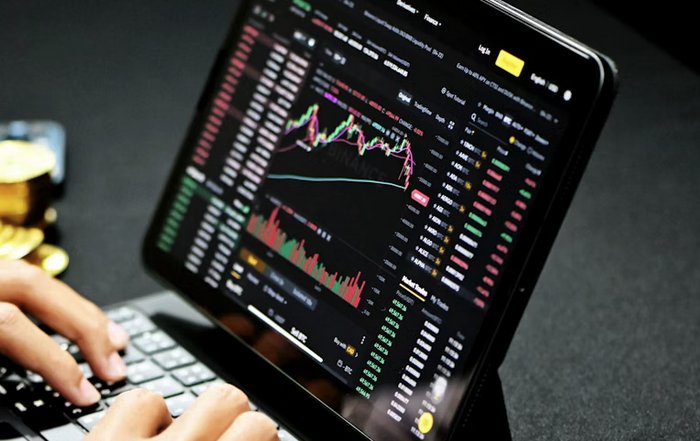
How Stock Markets Are Adapting to High-Speed Technology in 2026
Stock markets in 2026 operate in an environment where microsecond trading, artificial intelligence, and cloud-native infrastructure have moved from frontier experiments to foundational elements of global finance. For the readership of BizFactsDaily.com, which spans corporate leaders, founders, institutional investors, and technology professionals across North America, Europe, Asia, Africa, and South America, this transformation is not a distant technical curiosity; it is reshaping how capital is raised, how risk is priced, and how competitive advantage is built in virtually every major sector of the economy. As exchanges from New York and London to Frankfurt, Singapore, Tokyo, Hong Kong, and São Paulo continue to modernize their systems, the central question is no longer whether markets will embrace high-speed technology, but how they can do so in a way that enhances efficiency, fairness, resilience, and trust.
From Open Outcry to Microseconds: A New Global Baseline
The transition from open outcry to fully electronic markets is now a well-established historical arc, yet the last half-decade has pushed market microstructure into a new phase in which latency is measured in microseconds, message rates in millions per second, and competition for order flow is effectively a competition in systems engineering. Major exchanges such as New York Stock Exchange (NYSE), Nasdaq, London Stock Exchange Group (LSEG), Deutsche Börse, Euronext, and Singapore Exchange (SGX) have invested heavily in ultra-low-latency matching engines, deterministic networking, and co-location services that allow participants to place their servers physically adjacent to exchange infrastructure. Readers who want to understand how this architecture has evolved can review the market structure materials available through Nasdaq's market technology resources, which illustrate how matching engines, market data feeds, and risk checks are orchestrated at scale.
This relentless push for speed has forced a parallel transformation among brokers, market makers, asset managers, and proprietary trading firms. Technology stacks that once resembled those of telecom carriers or high-performance computing labs are now commonplace in leading trading organizations, with specialized hardware, microwave and millimeter-wave links, and highly optimized software deployed to shave microseconds from round-trip latency. At the same time, regulators such as the U.S. Securities and Exchange Commission (SEC), the European Securities and Markets Authority (ESMA), the Financial Conduct Authority (FCA) in the United Kingdom, and the Monetary Authority of Singapore (MAS) have been compelled to rethink their own supervisory frameworks to keep pace with markets operating at machine speed; the SEC's ongoing work on equity market modernization, outlined on its official market structure page, exemplifies how oversight is being adapted to this environment.
For a platform like BizFactsDaily.com, which regularly analyzes developments in stock markets and global capital flows, the key insight is that raw speed has become table stakes rather than a differentiator. What now defines leadership is the ability to integrate low-latency infrastructure with advanced data analytics, robust governance, and disciplined risk management. This is as true for trading desks in New York, Chicago, and London as it is for emerging financial hubs in Toronto, Amsterdam, Dubai, Johannesburg, Singapore, and Seoul, where competition for cross-border order flow increasingly hinges on technological sophistication and regulatory credibility.
Algorithmic Market Makers and the New Liquidity Regime
High-frequency and algorithmic trading have matured into core components of modern market liquidity, fundamentally reshaping how bid-ask spreads are set, how depth is provided, and how volatility propagates across asset classes. In the United States and Europe, a large proportion of equity, ETF, and foreign exchange volume is now intermediated by algorithmic market makers that update quotes in microseconds based on continuous analysis of order book dynamics, cross-venue price discrepancies, and macro or micro news events. The Bank for International Settlements (BIS) has documented these shifts in its work on fast markets and algorithmic trading, which provides a useful reference point for readers seeking a global policy view on market microstructure evolution.
In Asia-Pacific, exchanges in Japan, Singapore, South Korea, and increasingly India have actively courted algorithmic firms through co-location, standardized low-latency APIs, and incentives for liquidity provision. Market statistics and connectivity information published by SGX in its market access resources illustrate how exchanges position themselves as global hubs for high-speed trading strategies spanning equities, derivatives, commodities, and currencies. Traditional broker-dealers and universal banks, once dominant intermediaries in voice and floor-based markets, have responded by investing in electronic execution platforms, smart order routing, and internalization engines, effectively transforming themselves into technology companies that happen to hold banking licenses.
For the audience of BizFactsDaily.com, which closely follows innovation and investment trends, it is important to recognize that algorithmic trading is now embedded in the plumbing of markets rather than confined to a speculative niche. Pension funds in Canada and the Netherlands, sovereign wealth funds in the Middle East and Asia, insurers in Germany and France, and retail aggregators in the United States all rely, directly or indirectly, on algorithmic execution to minimize transaction costs and market impact. Studies by the OECD on institutional investors and liquidity, accessible through its work on financial markets and institutional investors, show how these dynamics influence long-term capital allocation, especially in periods of stress when liquidity can fragment across venues and products.
Artificial Intelligence as the Market's Cognitive Layer
If low-latency infrastructure provides the nervous system of modern markets, artificial intelligence increasingly serves as the cognitive layer that interprets signals, designs strategies, and monitors behavior. By 2026, leading asset managers, hedge funds, and proprietary trading firms across the United States, United Kingdom, Germany, Switzerland, Singapore, Hong Kong, and Australia routinely deploy machine learning for portfolio construction, factor modeling, trade execution, and risk analytics. Natural language processing models ingest earnings call transcripts, regulatory filings, news articles, and even social media feeds to extract sentiment, detect regime shifts, and anticipate corporate events. Computer vision algorithms interpret satellite imagery, shipping data, and traffic patterns to infer supply-demand imbalances in sectors ranging from energy and agriculture to retail and logistics. Reinforcement learning techniques are applied to optimize execution algorithms that adapt dynamically to changing order book conditions.
Consultancies such as McKinsey & Company have chronicled the adoption of AI in financial services, and their insights on AI in banking and markets illustrate how leading institutions combine domain expertise with advanced analytics. For readers of BizFactsDaily.com, who track the broader evolution of artificial intelligence and technology, the crucial point is that AI is no longer an optional add-on; it is becoming a prerequisite for competitive participation in markets where data volumes are overwhelming and time horizons are compressed.
Regulators and exchanges are also deploying AI, particularly in the realm of market surveillance and compliance. Anomaly detection models sift through billions of order and trade messages to identify patterns associated with spoofing, layering, front-running, and other forms of market abuse. The Financial Stability Board (FSB), through its work on FinTech and market resilience, has highlighted both the opportunities and risks associated with AI in financial systems, emphasizing the need for robust governance, explainability, and supervisory capacity. In parallel, policymakers in the European Union, the United States, the United Kingdom, and Asia are developing AI-specific regulatory frameworks. The European Commission's evolving AI regulatory initiatives provide a template for risk-based oversight that is likely to influence global norms.
For BizFactsDaily.com, which positions itself as a trusted source on business and technology strategy, the intersection of AI and capital markets underscores the importance of Experience, Expertise, Authoritativeness, and Trustworthiness. Firms can no longer rely solely on black-box models; they must demonstrate rigorous validation, clear documentation, and alignment with ethical and regulatory expectations, particularly when AI is used in areas such as credit underwriting, retail investment advice, and systemic risk monitoring.
Cloud, Edge Computing, and the Re-Architecture of Market Infrastructure
The migration of capital markets infrastructure to cloud and edge environments represents one of the most consequential architectural shifts of the past decade. Exchanges, clearing houses, and major banks are increasingly adopting hybrid models in which latency-critical components-such as order matching, risk checks, and real-time netting-are deployed in high-performance data centers or co-location facilities, while analytics, historical data processing, regulatory reporting, and client-facing applications run in public or private clouds. Partnerships between exchanges and hyperscale providers such as Amazon Web Services (AWS), Microsoft Azure, and Google Cloud have multiplied, with several venues in North America, Europe, and Asia now operating cloud-based secondary markets or data distribution platforms.
The World Federation of Exchanges (WFE) has explored these developments in its analyses of technology trends in market infrastructure, highlighting how cloud adoption can enhance scalability, resilience, and product innovation while also introducing new dependencies and cybersecurity considerations. For readers of BizFactsDaily.com who monitor economy and news developments, it is clear that this re-architecture is not merely an IT optimization; it is reshaping competitive dynamics among exchanges and lowering barriers to entry for new electronic venues in regions such as Latin America, the Middle East, and Sub-Saharan Africa.
At the same time, the rise of edge computing and specialized low-latency networks ensures that high-frequency traders and market makers can continue to operate at microsecond timescales. Many firms deploy their core trading engines in proximity to major exchange data centers in New Jersey, London, Frankfurt, Zurich, Tokyo, and Singapore, while leveraging cloud resources for research, backtesting, and risk aggregation. Consulting firms such as Deloitte have examined these trends in their work on capital markets modernization, emphasizing the strategic choices that institutions must make about which functions to centralize in the cloud and which to keep at the edge.
Digital Assets, Tokenization, and the Convergence of Market Infrastructures
By 2026, the once-separate worlds of traditional securities markets and digital assets have become increasingly intertwined. Regulated exchanges in the United States, United Kingdom, European Union, Switzerland, Singapore, and Hong Kong now list a growing range of crypto-linked exchange-traded products, tokenized bonds and funds, and, in some jurisdictions, fully on-chain securities. High-speed trading technology, originally honed in equity and FX markets, has been applied to crypto venues, where market makers arbitrage price discrepancies across centralized exchanges, decentralized protocols, and tokenized representations of traditional assets.
Regulatory clarity, while still uneven globally, has improved in key jurisdictions. The SEC, ESMA, FCA, MAS, the Financial Services Agency (FSA) in Japan, and the Swiss Financial Market Supervisory Authority (FINMA) have all advanced rules governing custody, market abuse, disclosure, and consumer protection in digital asset markets. The International Monetary Fund (IMF) provides a useful overview of these efforts in its work on digital money and crypto assets, which is closely followed by readers of BizFactsDaily.com who track crypto and digital finance.
This regulatory progress has encouraged traditional institutions-global banks, asset managers, and market infrastructure providers-to experiment with tokenization and distributed ledger technology (DLT) for post-trade processes. Several pilot projects have demonstrated the potential for near-instant settlement of tokenized securities, intraday repo, and cross-currency transactions, often in partnership with central banks exploring wholesale central bank digital currencies (wCBDCs). The Bank of England and other central banks have analyzed these possibilities in their research on DLT in financial market infrastructures, underscoring both efficiency gains and operational risks. For BizFactsDaily.com, which covers the convergence of traditional and digital markets for a global business audience, the strategic implication is clear: digital asset capabilities are becoming part of the standard toolkit for institutions that wish to remain relevant in a tokenized future.
Retail Access, Market Design, and the Democratization Debate
The democratization of market access continues to be one of the most visible manifestations of high-speed technology. Commission-free trading platforms, mobile-first brokerage apps, and fractional share capabilities have enabled millions of new investors in the United States, United Kingdom, Germany, France, Canada, Australia, India, and Southeast Asia to participate in equity and ETF markets with small ticket sizes and real-time execution. Behind these user-friendly interfaces lie complex high-speed systems that aggregate orders, route them to venues offering best execution or payment for order flow, and manage risk and margin in real time.
Regulators and policymakers have expressed both optimism and concern about these developments. While improved access and lower costs are widely welcomed, issues such as gamification, leverage, options trading by inexperienced investors, and the opacity of order routing arrangements have triggered reviews and, in some cases, reforms. Research by institutions such as the Brookings Institution on retail trading and market structure sheds light on how retail flows interact with institutional liquidity and volatility. For BizFactsDaily.com, which also analyzes marketing and digital engagement strategies, the design of these platforms raises important questions about behavioral nudges, disclosure, and the boundary between education and promotion.
In emerging markets, digital brokers and neobanks are using cloud infrastructure and open banking APIs to extend low-cost access to domestic and international securities. The World Bank's work on financial inclusion and digital finance documents how mobile-first platforms in Africa, South Asia, and Latin America are bringing first-time investors into capital markets, often in tandem with digital payments and savings products. For a global readership that turns to BizFactsDaily.com for insights into banking and inclusive growth, these developments illustrate how high-speed technology can support broader economic participation, provided that investor protection, literacy, and product suitability are not neglected.
Employment, Skills, and the Human Capital Challenge
The technological transformation of stock markets has profound implications for employment and skills. Trading floors crowded with voice brokers have largely given way to teams of quantitative researchers, software engineers, data scientists, cybersecurity specialists, and regulatory technologists. In leading financial centers such as New York, London, Frankfurt, Zurich, Singapore, Hong Kong, Tokyo, and Sydney, demand has surged for professionals who can bridge quantitative finance, machine learning, and large-scale systems architecture. At the same time, automation has reduced headcount in some traditional middle- and back-office roles, echoing broader trends in employment and digitalization.
The OECD's analyses of the future of work and skills highlight how technology-intensive sectors such as finance are polarizing demand toward higher-skilled roles while placing pressure on workers in routine-intensive occupations. For BizFactsDaily.com, which regularly profiles founders and fintech leaders, this shift underscores the premium on interdisciplinary teams that combine market microstructure expertise, regulatory fluency, and cutting-edge engineering. Start-ups in algorithmic trading, digital asset infrastructure, regtech, and ESG analytics increasingly recruit talent from both traditional finance and Big Tech, creating new career pathways that span continents and industries.
Universities and professional organizations have responded by expanding programs in quantitative finance, financial engineering, computer science, and data analytics. The CFA Institute, for example, has integrated topics such as algorithmic trading, AI, and climate risk into its materials on capital markets and professional standards. For ambitious professionals across the United States, Europe, Asia, Africa, and Latin America, continuous learning in these domains has become essential to remaining competitive in a market ecosystem where technology and regulation evolve rapidly.
Regulation, Systemic Risk, and Market Resilience
As markets become faster, more interconnected, and more dependent on complex technology stacks, regulators face the challenge of ensuring that innovation does not undermine stability or fairness. Since the global financial crisis, authorities have introduced circuit breakers, volatility auctions, minimum resting times for certain orders, and enhanced reporting for algorithmic strategies. In 2026, attention has increasingly turned to the systemic implications of AI, cloud concentration, cyber risk, and the growing linkages between traditional and digital asset markets.
Global standard setters such as the Financial Stability Board (FSB), the International Organization of Securities Commissions (IOSCO), and the BIS continue to coordinate cross-border policy approaches. IOSCO's work on secondary and other markets provides insight into how regulators are addressing issues such as cross-venue fragmentation, high-frequency trading, and the resilience of trading halts and reference prices. For BizFactsDaily.com, which pays close attention to sustainable and responsible finance, it is notable that the regulatory agenda now extends beyond microstructure to encompass climate risk, ESG disclosures, and the integration of sustainability into prudential and conduct frameworks.
The emergence of global sustainability reporting standards under the International Sustainability Standards Board (ISSB), hosted by IFRS, has begun to harmonize expectations for corporate climate and ESG disclosures. The IFRS sustainability portal outlines these standards, which are increasingly referenced by exchanges and regulators in Europe, the United States, Asia, and beyond. At the same time, cybersecurity has become a central concern. Agencies such as the Cybersecurity and Infrastructure Security Agency (CISA) in the United States publish guidance on protecting critical financial infrastructure, reflecting the reality that a major cyber incident at an exchange, clearing house, or large broker-dealer could have systemic consequences.
Sustainability Data, High-Speed Analytics, and the ESG Imperative
One of the most significant developments of recent years has been the integration of sustainability metrics into mainstream investment processes. Investors across North America, Europe, and Asia increasingly demand high-quality, comparable data on environmental, social, and governance performance. Exchanges in the United States, United Kingdom, Germany, France, the Netherlands, Sweden, Singapore, Japan, and other jurisdictions have responded by enhancing ESG disclosure requirements, launching green bond and sustainability-linked product segments, and promoting sustainability indices. High-speed technology, combined with AI, enables market participants to ingest and analyze this data at scale, integrating climate risk, supply chain resilience, and social impact into portfolio construction and trading strategies.
The UN-supported Principles for Responsible Investment (PRI) provides extensive resources on ESG integration in equity markets, illustrating how institutional investors are incorporating sustainability into both strategic asset allocation and high-frequency trading decisions. For readers of BizFactsDaily.com, who follow investment and sustainability trends, the convergence of ESG data and high-speed analytics presents a powerful opportunity: capital can be allocated not only on the basis of risk and return, but also on alignment with long-term environmental and social objectives.
Central banks and supervisors gathered under the Network for Greening the Financial System (NGFS) have emphasized the importance of integrating climate-related risk into financial stability assessments, with their reports available via the NGFS website. As real-time and near-real-time sustainability data becomes more widely available-ranging from emissions monitoring and physical climate indicators to regulatory developments and litigation events-algorithmic strategies are beginning to incorporate these signals. This evolution suggests that over time, high-speed markets may reward firms that manage climate and ESG risks effectively, while penalizing those that lag, thereby reinforcing policy efforts aimed at decarbonization and social resilience.
Strategic Implications for Global Businesses and Investors
For the global business community that relies on BizFactsDaily.com as a guide to interconnected trends in technology, business, and capital markets, the adaptation of stock markets to high-speed technology in 2026 carries several strategic implications. First, market access and execution quality have become strategic decisions rather than operational details. Corporates managing share buybacks, treasury operations, and hedging programs must consider not only the cost and reliability of their banking partners, but also the sophistication of those partners' execution algorithms, connectivity, and data analytics. Asset managers and family offices, whether based in New York, London, Frankfurt, Zurich, Singapore, Dubai, or São Paulo, increasingly evaluate brokers and platforms on their ability to integrate low-latency infrastructure with transparent routing and robust risk controls.
Second, the sources of competitive edge have shifted from raw speed to the fusion of speed with intelligence. AI, advanced analytics, and domain expertise now determine which firms can transform torrents of real-time data into actionable insight. Analyses such as PwC's work on capital markets 2030 emphasize that organizations must invest in data governance, model risk management, and cross-functional collaboration if they are to translate technological capabilities into sustainable performance. This imperative resonates strongly with the editorial focus of BizFactsDaily.com, which consistently highlights Experience, Expertise, Authoritativeness, and Trustworthiness as the foundations of long-term success.
Third, the convergence of traditional and digital asset markets requires a more holistic approach to portfolio construction and risk management. Tokenized securities, crypto ETFs, stablecoins, and on-chain settlement infrastructures introduce new correlation structures, liquidity profiles, and counterparty risks. Institutions operating across the United States, United Kingdom, European Union, Switzerland, Singapore, Hong Kong, Japan, South Korea, and the Gulf states must navigate regulatory fragmentation while building integrated frameworks that capture exposures across both centralized and decentralized venues.
Finally, the broader macroeconomic and geopolitical context-from inflation cycles and interest rate paths to geopolitical tensions, trade realignments, and demographic shifts-interacts with high-speed market dynamics in complex ways. The IMF's World Economic Outlook provides a valuable macro backdrop, but investors must also understand how algorithmic strategies, liquidity provision, and cross-asset linkages can amplify or dampen market reactions to macro shocks. For the readership of BizFactsDaily.com, which spans regions from North America and Europe to Asia-Pacific, Africa, and South America, this underscores the need to combine macro insight with microstructure awareness when making strategic capital allocation decisions.
Building Trustworthy High-Speed Markets in the Years Ahead
As 2026 progresses, stock markets around the world will continue to deepen their reliance on high-speed technology, AI, and digital infrastructure. The challenge for exchanges, regulators, and market participants is to ensure that these innovations reinforce, rather than erode, the core functions of capital markets: efficient price discovery, fair and open access, robust liquidity, and long-term capital formation. For BizFactsDaily.com, whose mission is to provide a clear, authoritative lens on the intersection of markets, technology, and real-world business decisions, this means focusing not only on the technical details of latency, algorithms, and cloud architectures, but also on governance, transparency, and resilience.
Trustworthy high-speed markets will be built by institutions that combine cutting-edge systems with disciplined risk management, strong ethical frameworks, and a commitment to investor protection. They will be shaped by regulators who engage constructively with innovation while guarding against systemic vulnerabilities and unequal access. And they will be navigated most effectively by businesses and investors who invest in understanding both the opportunities and the risks inherent in markets that move at machine speed. Whether operating from New York or San Francisco, London or Frankfurt, Paris or Milan, Toronto or Vancouver, Singapore or Tokyo, Sydney or Melbourne, Johannesburg or Lagos, São Paulo or Mexico City, those who align technological capability with expertise, authoritativeness, and trustworthiness will be best positioned to thrive in the evolving architecture of global capital markets.
