
Intelligent Industry 2026: How Smart Manufacturing and Connected Supply Chains Are Redefining Global Business
Intelligent Industry Moves from Vision to Operating Reality
By 2026, the intelligent industry revolution has moved decisively from pilot projects and isolated case studies into the core operating model of leading enterprises across North America, Europe, and Asia-Pacific. What began in the early 2010s as exploratory initiatives in digital factories and data-driven logistics has matured into a strategic imperative for businesses that expect to compete in the United States, Germany, Japan, the United Kingdom, Canada, Singapore, Australia, China, and other advanced economies. For the editorial team at BizFactsDaily.com, which has been tracking these developments across its dedicated coverage of business, technology, and global markets, the shift is unmistakable: smart manufacturing and connected supply chains are no longer optional upgrades but foundational infrastructure for modern commerce.
This transformation is driven by the convergence of industrial IoT, advanced robotics, artificial intelligence, 5G and beyond-5G connectivity, and increasingly sophisticated cloud and edge computing architectures. Industrial leaders such as Siemens, ABB, Bosch, and Amazon Web Services have demonstrated in practice that integrating smart sensors, autonomous systems, and real-time analytics can compress production cycles, improve quality, reduce energy use, and increase resilience in the face of geopolitical shocks, climate disruptions, and volatile demand. Readers seeking a deeper exploration of these technologies and their business implications can review the artificial intelligence insights curated by BizFactsDaily at its AI section, which examines how algorithmic decision-making is reshaping industrial strategy.
The acceleration of intelligent industry has been reinforced by lessons learned from the supply chain crises of the early 2020s, when pandemic-related shutdowns, port congestion, semiconductor shortages, and regional conflicts exposed the fragility of linear, opaque logistics networks. Analyses from the World Economic Forum show how governments and corporations responded by fast-tracking digitalization to improve visibility, redundancy, and responsiveness across borders, particularly in Europe, North America, and Asia. Those wishing to understand how these macro trends intersect with corporate performance and national competitiveness can explore broader economic context through BizFactsDaily's economy coverage, which tracks how digital infrastructure and industrial policy are reshaping growth trajectories.
Smart Manufacturing as the New Industrial Benchmark
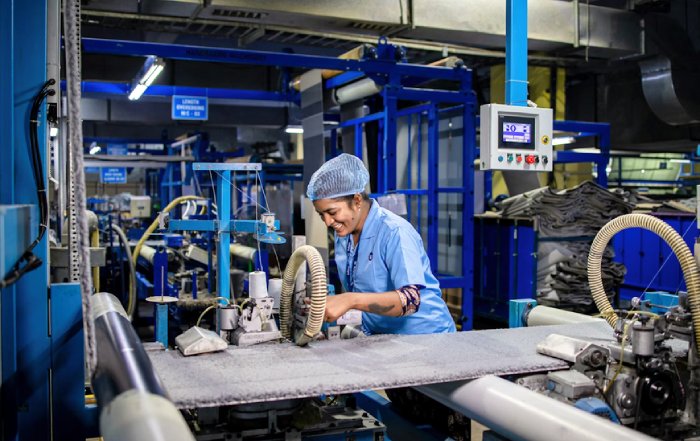
In 2026, smart manufacturing is best understood as a holistic operating model rather than a single technology deployment. It combines instrumented production lines, AI-driven process control, cyber-physical systems, and flexible automation to create factories that sense, analyze, and act in near real time. In the United States, Germany, South Korea, Sweden, Singapore, and Japan, leading plants function as fully connected ecosystems where thousands of embedded sensors continuously monitor temperature, vibration, energy consumption, material flow, and equipment health, while cloud and edge systems translate these signals into operational decisions.
This data-rich environment enables a level of transparency that traditional factories could not approach. Production managers can visualize bottlenecks as they emerge, maintenance teams receive predictive alerts before failures occur, and quality engineers analyze deviations as soon as they appear rather than weeks later in retrospective audits. Such capabilities have a direct impact on cost, uptime, and throughput, but they also support environmental and social goals by reducing scrap, optimizing energy use, and improving worker safety. Readers interested in how these operational gains intersect with environmental targets can learn more about sustainable business practices, where BizFactsDaily explores decarbonization, circularity, and ESG reporting in industrial contexts.
The rise of edge computing has been particularly decisive. Where earlier industrial systems pushed data to centralized servers or distant clouds, often creating latency and bandwidth constraints, modern architectures process large volumes of information directly at the machine or production-cell level. Technology providers such as Microsoft, Cisco, and NVIDIA have built platforms that allow AI models to run on local gateways and embedded devices, enabling millisecond-level responses in applications like high-speed assembly, robotic welding, and quality inspection. This is vital for industries such as automotive, aerospace, and pharmaceuticals, where even minor delays or anomalies can have costly consequences.
Academic and applied research institutions have underpinned this evolution with frameworks and reference architectures that manufacturers can adopt and adapt. The MIT Center for Transportation & Logistics has published influential work on digital manufacturing, supply chain resilience, and data-driven operations that continues to inform both policymakers and industrial executives. In Germany, the Fraunhofer Society has played a similar role by piloting advanced automation and Industry 4.0 concepts in collaboration with Mittelstand manufacturers and global enterprises, helping bridge theory and implementation in a way that many firms in Europe and beyond have sought to emulate.
Connected Supply Chains as Strategic Infrastructure
As manufacturing has become smarter, supply chains have evolved from linear cost centers into dynamic, intelligence-driven networks that are now treated as strategic assets at board level. The disruptive events of the early 2020s highlighted how vulnerable traditional models were to port closures, energy price spikes, export controls, and regional lockdowns. By 2026, companies operating in markets from the United States and Canada to the United Kingdom, Singapore, Australia, and across the Eurozone increasingly design their supply chains around real-time data, scenario planning, and multi-node resilience.
Connected supply chains integrate IoT tracking across containers, pallets, and individual high-value items; blockchain-based verification for provenance and compliance; machine learning for demand and inventory forecasting; and robotics-enabled warehousing for high-speed fulfillment. These components are orchestrated by cloud-based control towers that provide a single view of inventory, capacity, and risk across suppliers, manufacturing sites, distribution centers, and transportation modes. For executives and analysts following these developments, BizFactsDaily's editorial team regularly connects such technology shifts to broader macroeconomic dynamics in its economy section, where global trade patterns, inflation, and industrial policy are assessed through a digital lens.
Industry leaders such as SAP, Oracle, IBM, and Maersk have built platforms that help multinational enterprises integrate suppliers from Asia, Europe, and the Americas into cohesive digital ecosystems. These systems ingest signals on everything from weather events and port congestion to regulatory changes and currency volatility, enabling companies to reroute shipments, adjust production schedules, or rebalance inventory before disruptions cascade. The OECD has documented how such digitally enabled supply chains contribute to productivity and trade resilience, underscoring that logistics capabilities now play a central role in national competitiveness, particularly for export-oriented economies such as Germany, South Korea, and Singapore.
In heavily regulated sectors like pharmaceuticals, medical devices, and food, end-to-end traceability has moved from a compliance aspiration to an operational necessity. Real-time tracking and tamper-evident records support safety recalls, authenticity verification, and regulatory reporting in markets such as the United States, the European Union, and Japan, where authorities have tightened rules in response to past scandals and counterfeiting concerns. For readers following the intersection of regulation, risk, and business opportunity, BizFactsDaily's news coverage regularly highlights how policy shifts in Washington, Brussels, Beijing, and other capitals are reshaping supply chain design and investment.
Artificial Intelligence as the Operating System of Modern Industry
Artificial intelligence now functions as the core analytical engine of intelligent industry. In 2026, AI is deeply embedded in production planning, maintenance, quality control, sourcing, scheduling, and logistics orchestration. What distinguishes current deployments from earlier waves of automation is the breadth of use cases and the maturity of supporting infrastructure, including industrial clouds, standardized data models, and robust connectivity. Readers who wish to explore the broader technological foundations of this shift can review BizFactsDaily's coverage of technology trends, where the evolution of cloud, edge, and AI platforms is analyzed through a business lens.
Major technology providers such as Google, IBM, and Siemens have developed AI platforms capable of ingesting and analyzing terabytes of sensor data generated by factories, warehouses, vehicles, and energy systems. These platforms apply machine learning and deep learning to detect anomalies, predict failures, and recommend parameter adjustments that improve yield, reduce downtime, and optimize resource consumption. The National Institute of Standards and Technology has documented significant advances in industrial computer vision systems, which now routinely outperform human inspectors in tasks such as detecting micro-cracks in turbine blades, identifying soldering defects on printed circuit boards, or spotting surface anomalies in automotive paint finishes.
Generative AI has expanded from text and image synthesis into engineering and product design, where tools from Autodesk and Dassault Systèmes help designers and engineers explore thousands of design alternatives that balance weight, strength, manufacturability, and cost. These generative design systems are widely used in automotive and aerospace hubs across Germany, Japan, South Korea, Sweden, and the United States, where competitive advantage increasingly depends on compressing development cycles while meeting stringent safety and sustainability requirements. BizFactsDaily's innovation section frequently profiles how such tools are changing the way founders, engineers, and product leaders approach R&D.
AI's role in forecasting and risk management has also expanded. Advanced models now incorporate macroeconomic indicators, labor market data, weather patterns, shipping data, and even social sentiment to predict demand swings and supply constraints. Data from institutions such as the U.S. Bureau of Labor Statistics supports labor-related risk modeling, helping companies anticipate shortages in skilled roles, wage pressures, and regional employment shifts that could impact production and logistics.
In logistics centers across Singapore, Germany, the Netherlands, and the United States, AI coordinates fleets of autonomous mobile robots, optimizes storage layouts, and orchestrates order picking to meet tight delivery windows for e-commerce and omnichannel retail. While these advances boost efficiency, they also reshape employment patterns, a topic BizFactsDaily examines regularly in its dedicated employment coverage, where the team analyzes how automation, reskilling, and new job categories are altering labor markets from North America and Europe to Asia-Pacific and Africa.
Robotics and Automation as Visible Catalysts of Change
Robotics remains the most visible symbol of industrial transformation. In 2026, advanced robots are standard in factories, warehouses, and logistics hubs across North America, Europe, and Asia, performing tasks that range from delicate assembly and precision welding to palletizing, packaging, and intra-facility transport. Leading robotics companies including FANUC, KUKA, Yaskawa, and ABB have developed modular, reprogrammable platforms that can be redeployed quickly as product lines change, helping manufacturers in the United States, United Kingdom, Italy, France, and Germany respond to shorter product life cycles and customized demand.
Collaborative robots, or cobots, represent a particularly important evolution. Equipped with force sensors, vision systems, and advanced safety controls, cobots can work side by side with human operators on tasks such as assembly, testing, and material handling, blending the dexterity and judgment of people with the repeatability and stamina of machines. The International Federation of Robotics has reported continued growth in cobot installations worldwide, with especially rapid adoption in small and medium-sized enterprises that previously viewed robotics as too complex or capital-intensive.
Automation has also transformed ports, airports, and logistics corridors. Facilities in Singapore, Rotterdam, Hamburg, Los Angeles, Busan, and Shanghai rely on automated cranes, guided vehicles, and AI-driven yard management systems to handle growing container volumes while managing labor constraints and environmental regulations. On-road freight is being reshaped by autonomous and semi-autonomous trucking technologies developed by Tesla, Volvo, Einride, and others, which are being piloted and regulated in corridors across the United States and Europe. The U.S. Department of Transportation and its counterparts in the European Union, Australia, and Asia continue to refine safety and regulatory frameworks to accommodate these innovations while protecting public interests.
In markets such as Canada, Australia, Denmark, Norway, and the Netherlands, warehouse automation has become a priority as aging populations, tight labor markets, and rising wage costs push companies to seek productivity gains without compromising service levels. For executives, investors, and operators tracking how automation is changing cost structures and competitive dynamics in retail, manufacturing, and logistics, BizFactsDaily's business analysis provides ongoing, data-driven coverage.
Digital Twins and the Rise of Virtual Operations
Digital twins have emerged as one of the most powerful tools in the intelligent industry toolkit. By 2026, companies in automotive, aerospace, energy, pharmaceuticals, consumer electronics, and process industries use digital twins to simulate, monitor, and optimize assets ranging from individual machines and production lines to entire factories and global logistics networks. These virtual replicas integrate engineering models, sensor data, historical performance, and AI-based predictions to create a continuously updated mirror of physical operations.
Industrial technology leaders including Siemens, Honeywell, General Electric, and Dassault Systèmes have invested heavily in digital twin platforms that allow organizations to test process changes, validate new product designs, and optimize energy consumption before implementing changes in the real world. The concept has roots in aerospace, where the National Aeronautics and Space Administration used virtual models to monitor and manage mission-critical systems, and it has now spread to sectors where downtime and defects carry high financial or safety costs.
Digital twins are particularly valuable for companies operating complex, multi-plant networks across regions such as the United States, Italy, Germany, Singapore, and China. Executives can simulate how a disruption at a single facility or supplier would ripple through production and distribution, and then evaluate alternative sourcing, production, or routing strategies. For readers interested in how such capabilities are influencing cross-border investment, trade flows, and regional competitiveness, BizFactsDaily's global section offers ongoing coverage of industrial policy, reshoring, and supply chain diversification.
In the energy and heavy industry sectors, digital twins support decarbonization by identifying inefficiencies, optimizing process parameters, and modeling the impact of equipment upgrades or fuel shifts. The International Energy Agency has highlighted how digital modeling tools contribute to emissions reductions and energy efficiency, particularly in hard-to-abate sectors such as steel, cement, and chemicals, where incremental improvements can have significant global impact.
Cybersecurity as a Non-Negotiable Foundation
Hyperconnectivity brings not only efficiency and visibility but also heightened exposure to cyber threats. In 2026, industrial cybersecurity is a board-level concern for organizations in the United States, Australia, Singapore, the United Kingdom, Germany, and beyond, as attackers increasingly target operational technology environments, IoT devices, logistics platforms, and cloud-based control systems. The financial, safety, and reputational risks associated with ransomware attacks, data breaches, and sabotage of critical infrastructure have made cybersecurity a non-negotiable pillar of intelligent industry.
Security providers such as Cisco, Fortinet, and CrowdStrike report sustained growth in attacks on manufacturing and supply chain environments, often exploiting legacy systems that were never designed to be connected to the internet. The Cybersecurity and Infrastructure Security Agency in the United States has issued detailed guidance on securing industrial control systems, emphasizing the need for network segmentation, continuous monitoring, and secure-by-design principles in both hardware and software.
Artificial intelligence is increasingly used on the defensive side as well, with machine learning models analyzing network traffic, system logs, and user behavior to detect anomalies that may indicate intrusions or insider threats. Research from institutions like Carnegie Mellon University has advanced the state of the art in AI-driven threat detection and response, but implementation remains challenging in environments where uptime is critical and patching windows are limited.
Blockchain technology contributes to security and trust in supply chains by providing tamper-resistant records of transactions, provenance, and custody. Enterprises and logistics providers, including IBM, Oracle, and Maersk, have piloted and scaled blockchain-based systems that reduce fraud, streamline documentation, and support compliance in cross-border trade. For readers following the intersection of distributed ledger technology, finance, and logistics, BizFactsDaily's crypto coverage examines how blockchain is evolving from speculative asset class to enterprise infrastructure.
Workforce Transformation and the Human Side of Intelligent Industry
Behind every successful intelligent industry initiative lies a profound workforce transformation. Across the United States, Germany, the Netherlands, Singapore, Japan, Canada, and emerging economies such as Brazil, Malaysia, South Africa, and Thailand, the nature of industrial employment is shifting toward roles that blend domain knowledge with digital fluency. Routine manual tasks are increasingly automated, while demand grows for engineers, robotics technicians, data scientists, AI specialists, cybersecurity experts, and digital operations managers. BizFactsDaily's employment section regularly analyzes how these shifts are playing out across regions and sectors.
The OECD has documented extensive upskilling and reskilling initiatives as governments, educational institutions, and companies attempt to prepare workers for new roles. Apprenticeships, dual-education systems, and partnerships between universities, vocational schools, and industry are being expanded in Germany, the Nordics, and parts of Asia, while North American firms increasingly invest in internal academies and online learning platforms to close skill gaps.
Human-machine collaboration is becoming the norm on factory floors and in warehouses, as workers supervise fleets of cobots, configure AI models, and interpret analytics dashboards rather than performing purely manual tasks. The European Commission has reported rising adoption of collaborative robotics and human-centric automation across Europe, where regulatory frameworks and cultural expectations emphasize worker safety and inclusion.
Talent competition has intensified, particularly in advanced hubs such as Singapore, London, Berlin, Toronto, Sydney, and Silicon Valley, prompting companies to focus not only on compensation but also on workplace flexibility, career development, and purpose-driven culture. The World Economic Forum has highlighted the link between inclusive workforce strategies and long-term performance, noting that organizations with strong learning cultures and diverse leadership teams are better positioned to navigate technological disruption. For founders and executives shaping these cultures, BizFactsDaily's founders-focused coverage offers case studies and interviews on leadership in the age of intelligent industry.
Capital Flows, Investment Priorities, and Market Performance
Capital markets have responded decisively to the rise of intelligent industry. In 2026, investors across North America, Europe, and Asia are channeling funds toward automation, AI, robotics, industrial software, and sustainable manufacturing solutions. Private equity and venture capital firms are backing startups that develop next-generation sensors, autonomous systems, industrial AI models, and green production technologies, while large industrial and technology incumbents pursue strategic acquisitions to strengthen their digital capabilities. BizFactsDaily tracks these developments in its investment coverage, where sector allocations, deal flows, and valuation trends are examined in depth.
Data from platforms such as PitchBook indicate that industrial technology remains one of the most active segments for venture and growth equity, with particular momentum in robotics-as-a-service, predictive maintenance, supply chain visibility platforms, and low-carbon industrial processes. Public markets have rewarded companies that successfully position themselves at the intersection of automation, data, and sustainability, with industrial software and robotics firms in the United States, Japan, and Europe often outperforming broader indices. BizFactsDaily's stock markets section analyzes how these trends affect index composition, sector rotation, and regional performance.
Multilateral institutions have incorporated intelligent industry into their macroeconomic modeling. The International Monetary Fund has noted that countries investing in digital infrastructure, advanced manufacturing, and resilient supply chains tend to exhibit stronger productivity growth and greater shock absorption capacity, particularly in the face of energy price volatility and geopolitical fragmentation. At the same time, the United Nations Industrial Development Organization has highlighted rapid growth in green industrial investments across Europe, East Asia, and parts of North America, as governments and corporations align capital allocation with climate commitments and ESG expectations. Readers can explore how these sustainability-focused investments intersect with industrial strategy through BizFactsDaily's dedicated sustainability coverage.
The Road Ahead: Competing at the Intelligent Edge
Looking toward the late 2020s, the trajectory of intelligent industry points toward even greater integration of AI, robotics, digital twins, blockchain, and edge computing into the core fabric of global business. For BizFactsDaily, which has positioned itself as a trusted source for executives, investors, and policymakers navigating this landscape, the central narrative is clear: competitive advantage increasingly depends on operating at the intelligent edge, where real-time data, autonomous systems, and human expertise intersect.
Organizations that succeed in this environment will be those that treat smart manufacturing and connected supply chains not as discrete IT projects but as long-term strategic transformations, supported by robust governance, cybersecurity, workforce development, and cross-functional collaboration. They will invest in flexible architectures that can adapt to new technologies and regulatory changes, and they will cultivate leadership teams that understand both operational realities and digital possibilities. For ongoing analysis of how these dynamics are playing out across regions-from the United States and Canada to Europe, Asia, Africa, and South America-readers can turn to BizFactsDaily's global insights and broader homepage at BizFactsDaily.com.
Smart manufacturing and connected supply chains have moved well beyond their early reputation as experimental or aspirational concepts. In 2026, they form the backbone of a new industrial era in which data-driven decision-making, autonomous systems, and integrated digital platforms define how value is created, delivered, and sustained. As technology continues to advance and economic pressures intensify, intelligent industry will remain at the center of strategic discussions in boardrooms and cabinet rooms alike, shaping business models, employment patterns, investment flows, and national competitiveness for decades to come.
