
How Edge Computing Supports Faster Business Decisions
Introduction: From Centralized Clouds to Intelligent Edges
As digital transformation reshapes enterprises across regions from North America and Europe to Asia-Pacific and Africa, the volume, velocity, and variability of data generated at the "edge" of networks-factories, retail stores, vehicles, hospitals, energy grids, and smartphones-have grown beyond what traditional centralized architectures can comfortably handle. In this environment, organizations that can sense, analyze, and act on data in milliseconds gain a powerful competitive advantage, while those that rely solely on distant data centers or cloud regions often struggle with latency, bandwidth constraints, regulatory limits, and resilience risks.
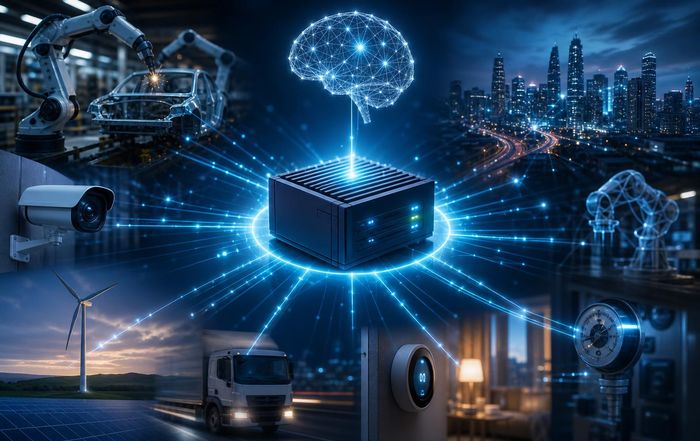
Edge computing, broadly defined as processing and analyzing data closer to where it is generated instead of routing everything to a central cloud, has therefore moved from a niche concept to a strategic pillar for decision-making. For the global business audience of BizFactsDaily, understanding how edge computing underpins faster, more reliable, and more context-aware decisions is no longer theoretical; it is a practical requirement for leaders in manufacturing, financial services, healthcare, retail, logistics, energy, and beyond.
This article explores how edge computing is accelerating business decisions, how it intersects with artificial intelligence, what architectures and governance models are emerging, and how executives can align edge strategies with broader initiatives in innovation, investment, and sustainable growth, drawing on insights from industry bodies, leading technology providers, and regulators.
What Edge Computing Really Means for Business
For many executives, edge computing is still associated primarily with technical infrastructure, such as gateways, micro data centers, and specialized chips. Yet the business significance lies in how these technologies change the timing, fidelity, and reliability of decision-making.
In a traditional cloud-centric model, data from sensors, machines, or customer devices is transported to centralized servers operated by providers such as Amazon Web Services, Microsoft Azure, or Google Cloud, processed there, and then used to generate insights or trigger actions. This approach is powerful for large-scale analytics, but it introduces delays and dependencies. Latency can range from tens to hundreds of milliseconds or more, depending on network conditions and physical distance, and in many industrial or financial scenarios, such delays are unacceptable.
Edge computing restructures this flow. Data is captured and at least partially processed locally-on an industrial PC, a smart camera, a 5G base station, or even within an embedded system-so that the most time-critical decisions can be made immediately. Only selected, aggregated, or anonymized data is then transmitted to the cloud for long-term storage, advanced analytics, or cross-site optimization. Organizations such as the Linux Foundation's LF Edge initiative and the OpenFog Consortium (now part of the Industrial Internet Consortium) have published reference architectures that emphasize this distributed, hierarchical processing model, which many global enterprises are now adopting.
Readers can explore how this distributed model intersects with broader technology and AI trends in the dedicated artificial intelligence coverage on BizFactsDaily and the platform's broader technology insights.
Latency, Bandwidth, and Reliability: The Core Drivers of Faster Decisions
The most frequently cited benefit of edge computing is reduced latency. In sectors like autonomous vehicles, robotics, or algorithmic trading, the difference between 5 milliseconds and 100 milliseconds can determine safety, profitability, or system stability. Research from organizations such as IEEE and ETSI has underscored that as more mission-critical applications move onto IP networks and 5G, deterministic low-latency performance becomes essential rather than optional, and edge architectures are a key enabler.
Beyond latency, bandwidth and reliability are equally important. High-resolution industrial cameras, LiDAR systems, or continuous monitoring devices can generate terabytes of data per day, which is prohibitively expensive or technically impossible to stream in full to a central cloud. By performing initial filtering, compression, and event detection at the edge, businesses send only what truly matters, reducing network costs and congestion while accelerating the time to insight.
Reliability is another decisive factor. Enterprises operating in remote locations, such as offshore oil platforms, rural logistics hubs, or geographically dispersed retail chains, cannot assume consistent high-quality connectivity. Edge computing allows local operations to continue functioning even when connections to central data centers are degraded or temporarily lost. In critical infrastructure, such as power grids or water systems, this capability is increasingly seen as a resilience and safety requirement, as reflected in guidance from bodies like the U.S. National Institute of Standards and Technology (NIST) and the European Union Agency for Cybersecurity (ENISA).
For readers of BizFactsDaily focused on macro trends, the interplay between latency, bandwidth, and reliability at the edge ties directly into broader themes in the global economy and innovation ecosystems, where infrastructure choices shape competitiveness and productivity.
Edge AI: Where Intelligence Meets Proximity
The most transformative impact of edge computing on business decisions emerges when it is combined with artificial intelligence and machine learning. Instead of simply forwarding raw data, edge devices increasingly run trained models that classify, predict, or optimize in real time. This "edge AI" paradigm is supported by hardware advances from companies such as NVIDIA, Intel, Qualcomm, and Arm, whose specialized accelerators and system-on-chip designs allow complex inference workloads to run on low-power devices.
According to analyses by firms like Gartner and IDC, a growing share of AI workloads is shifting toward the edge, particularly in industries where privacy, latency, and autonomy are critical. For example, computer vision models deployed on smart cameras in a warehouse can detect unsafe behavior, count inventory, or monitor equipment status without sending every frame to the cloud. Similarly, predictive maintenance models embedded in industrial controllers can identify anomalies in vibration patterns or temperature readings and trigger local interventions before a failure disrupts production.
Organizations exploring these approaches often rely on open-source frameworks such as TensorFlow Lite, PyTorch Mobile, or ONNX Runtime, which are optimized for constrained environments. Cloud providers have also introduced managed services to help train models centrally and deploy them to edge devices, bridging the gap between data science teams and operational technology environments. Readers interested in the broader context of AI investments and their impact on capital markets can consult BizFactsDaily's coverage of investment trends and stock markets.
Sector-by-Sector: How Edge Computing Accelerates Decisions
Edge computing is not a single market; it is a set of patterns that manifests differently in each industry. Across regions such as the United States, Europe, and Asia, several sectors illustrate how localized processing is reshaping decision-making.
In manufacturing, often labeled "Industry 4.0," factories are deploying edge platforms that integrate data from programmable logic controllers, robots, quality inspection cameras, and environmental sensors. By analyzing this data locally, plants can adjust process parameters in near real time, reducing scrap rates, energy use, and unplanned downtime. Organizations such as Siemens, Schneider Electric, and Rockwell Automation have introduced edge gateways and software designed specifically for industrial environments, while standards from bodies like the OPC Foundation support interoperable data exchange. Studies highlighted by McKinsey & Company and Boston Consulting Group emphasize that such real-time optimization is a key driver of productivity gains in advanced manufacturing economies like Germany, Japan, and South Korea.
In retail and consumer services, edge computing supports frictionless checkout experiences, dynamic pricing, and personalized in-store engagement. Smart shelves and cameras can detect stock-outs, monitor shopper flows, and trigger restocking or merchandising decisions without relying on constant cloud connectivity. Payment terminals and point-of-sale systems increasingly perform local fraud checks and biometric verification while synchronizing with central risk engines, a pattern that is particularly relevant for financial institutions covered in BizFactsDaily's banking and business sections.
Healthcare presents another compelling case, with telemedicine, remote patient monitoring, and smart hospital infrastructure all benefiting from edge processing. Wearable devices and home monitoring kits can analyze vital signs locally, sending alerts only when thresholds are breached, which reduces data overload for clinicians and preserves patient privacy. Inside hospitals, edge-based AI supports imaging diagnostics and workflow optimization, though regulatory requirements from authorities such as the U.S. Food and Drug Administration (FDA) and the European Medicines Agency (EMA) demand rigorous validation and governance.
In transportation and logistics, from autonomous vehicles to ports and rail networks, edge computing enables real-time routing, safety monitoring, and asset tracking. Technologies such as 5G and multi-access edge computing (MEC), standardized by bodies like 3GPP and ETSI, allow telecom operators to host applications close to end users, improving responsiveness for fleet management, drone operations, and smart traffic systems. These developments have implications for global trade and supply chains that are closely followed by BizFactsDaily's global business readers.
Financial Services, Crypto, and Real-Time Risk
Financial institutions, particularly in markets such as the United States, United Kingdom, Singapore, and Switzerland, are exploring edge computing to support ultra-low-latency trading, fraud detection, and customer experience enhancements. Co-location facilities near major exchanges already bring compute resources physically close to trading venues, and the same principle is extending to branch networks, ATMs, and mobile devices.
Edge analytics embedded in payment terminals or mobile banking apps can perform behavioral checks, device fingerprinting, and preliminary risk scoring before transactions are sent to central systems, reducing latency and improving fraud prevention. At the same time, regulators such as the Bank for International Settlements (BIS) and the European Central Bank (ECB) are emphasizing operational resilience and cybersecurity, prompting banks to design edge architectures that can sustain operations even when central data centers are under stress.
In the crypto and digital asset space, some projects are experimenting with edge nodes and lightweight clients that verify transactions or smart contracts locally, enhancing decentralization and user autonomy. While the technical and regulatory landscape remains fluid, especially as authorities like the U.S. Securities and Exchange Commission (SEC) and the European Securities and Markets Authority (ESMA) refine their stances, the principle of distributing computation closer to users aligns with broader blockchain narratives. Readers can follow related developments in BizFactsDaily's dedicated crypto coverage and its analysis of employment shifts in financial technology.
Architecture and Governance: From Pilot Projects to Enterprise-Scale Edge
Deploying edge computing at scale is not simply a matter of placing servers in new locations. It requires a coherent architecture that spans devices, connectivity, orchestration platforms, security controls, and observability tools. Enterprises are adopting layered models in which micro data centers, on-premises clusters, and regional cloud zones work together, often managed via container orchestration technologies such as Kubernetes and its edge-focused variants.
Industry groups like the Cloud Native Computing Foundation (CNCF) and projects such as KubeEdge and OpenYurt are helping organizations manage large fleets of edge nodes, enabling centralized policy control with local autonomy. Meanwhile, hyperscale providers including Amazon, Microsoft, and Google offer edge services that integrate with their clouds, while telecommunications companies deploy MEC platforms in 5G networks, blurring the boundaries between IT, OT, and network operations.
Governance is equally critical. Data classification frameworks determine which information is processed and stored locally, which is transmitted to central systems, and under what conditions. Privacy regulations such as the EU General Data Protection Regulation (GDPR) and the California Consumer Privacy Act (CCPA) influence how personal data is handled at the edge, particularly in sectors like retail, healthcare, and smart cities. Security architectures must account for the fact that edge devices are often physically accessible and may operate in less controlled environments, making techniques such as secure boot, hardware root of trust, and zero-trust networking increasingly important, as highlighted in guidance from NIST and leading cybersecurity firms.
For decision-makers tracking these shifts, BizFactsDaily offers ongoing news coverage and analysis that situates edge architectures within broader technology, regulatory, and market developments.
Data, AI, and Human Decision-Makers at the Edge
While automation is a central theme in edge computing discussions, many of the most impactful applications are not fully autonomous; they support human decision-makers by providing faster, richer, and more contextual information. In industrial control rooms, operations centers, and retail back offices, dashboards fed by edge analytics allow managers to detect anomalies, test hypotheses, and intervene before issues escalate.
This human-in-the-loop pattern is particularly important in regulated environments and high-stakes domains, where explainability and accountability are essential. Organizations are experimenting with techniques from the field of explainable AI, supported by research from institutions such as MIT, Stanford University, and the Alan Turing Institute, to make edge-based models more transparent. For example, a quality control system in a factory might highlight which features in an image led to a defect classification, helping engineers refine both processes and models.
Training and change management are therefore critical components of any edge strategy. Employees must understand not only how to interpret new indicators and alerts, but also when to trust automated outputs and when to escalate. As businesses in regions from Germany and Sweden to Singapore and Australia invest in upskilling their workforces for AI and edge-enabled operations, there is a significant impact on labor markets and organizational culture, topics that BizFactsDaily explores through its employment and business transformation reporting.
Sustainability and Responsible Edge Deployments
As enterprises deploy thousands or even millions of edge devices, sustainability considerations come to the foreground. Edge computing can contribute positively to environmental goals by enabling more efficient resource use, such as optimizing energy consumption in buildings, reducing waste in manufacturing, and supporting smart grid operations that integrate renewable energy sources. Organizations like the International Energy Agency (IEA) and World Resources Institute (WRI) have highlighted the role of digital technologies in achieving climate targets when deployed thoughtfully.
At the same time, there are legitimate concerns about the energy footprint and electronic waste associated with proliferating hardware. Responsible edge strategies therefore emphasize energy-efficient chips, modular designs that allow upgrades without full device replacement, and circular economy principles for hardware lifecycle management. Standards initiatives such as Energy Star, as well as corporate sustainability commitments reported under frameworks like the Global Reporting Initiative (GRI) and the Task Force on Climate-related Financial Disclosures (TCFD), are beginning to shape procurement and design choices.
For readers of BizFactsDaily who track ESG and climate-related business strategies, the intersection of edge computing and sustainability is a natural extension of the platform's focus on sustainable business practices and the evolving global economic landscape.
Investment, Risk, and Strategic Roadmaps
From an investment standpoint, edge computing spans multiple layers of the value chain: semiconductor design, device manufacturing, connectivity infrastructure, software platforms, and industry-specific solutions. Analysts at firms such as Deloitte, PwC, and Accenture have noted that capital is flowing into both established vendors and startups that specialize in edge orchestration, security, and AI models optimized for constrained environments. Public market investors monitor how large technology companies report revenue from edge-related services, while private equity and venture capital back specialized players in industrial IoT, edge analytics, and telecom infrastructure.
However, the path to value is not guaranteed. Organizations that rush into fragmented pilot projects without a coherent strategy often encounter integration challenges, security gaps, and difficulties scaling beyond a few sites. Successful adopters tend to align edge initiatives with clear business objectives-such as reducing downtime, improving customer experience, or enabling new revenue streams-and to establish shared platforms that can be reused across multiple use cases and regions.
Risk management is integral to these strategies. Cybersecurity threats, supply chain disruptions, and regulatory changes can all affect edge deployments. Boards and executive teams increasingly request comprehensive risk assessments that cover not only technical vulnerabilities but also data governance, vendor concentration, and geopolitical factors, particularly when edge infrastructure is deployed across jurisdictions with differing legal frameworks.
Readers who follow BizFactsDaily's in-depth coverage of investment, stock markets, and global business trends will recognize that edge computing is now part of mainstream strategic planning rather than a peripheral IT concern.
The Road Ahead for Edge-Enabled Decision-Making
Looking ahead, several trends are likely to shape how edge computing continues to support faster and more effective business decisions. Advances in 5G and the emerging 6G research agendas, coordinated by organizations such as 3GPP and national research programs in countries like South Korea, Japan, and Finland, will further reduce network latency and enable new forms of distributed computation. Standardization efforts around edge APIs and orchestration, led by bodies like ETSI, the CNCF, and the Industrial Internet Consortium, aim to reduce fragmentation and allow applications to run across heterogeneous infrastructures.
At the same time, regulatory scrutiny of AI, data privacy, and critical infrastructure is intensifying. The European Union's AI Act, for example, introduces risk-based requirements that will affect many edge AI deployments, especially in sectors like transportation, healthcare, and public services. Similar discussions are underway in the United States, the United Kingdom, and other jurisdictions, and businesses will need to ensure that their edge strategies align with evolving legal and ethical expectations.
For BizFactsDaily and its global readership, edge computing represents a convergence of many themes: the rise of artificial intelligence, the evolution of cloud and network architectures, the reshaping of industrial and financial systems, and the push toward more sustainable and resilient operations. As organizations in the United States, Europe, Asia, Africa, and South America continue to digitize their processes and products, the ability to make high-quality decisions at the edge-rapidly, securely, and responsibly-will increasingly distinguish leaders from laggards.
By combining technical innovation with robust governance, human-centered design, and a clear focus on business outcomes, enterprises can turn the distributed intelligence of edge computing into a powerful engine for growth, competitiveness, and positive societal impact, a story that BizFactsDaily will continue to follow closely across its interconnected coverage of business, technology, and the global economy.
