
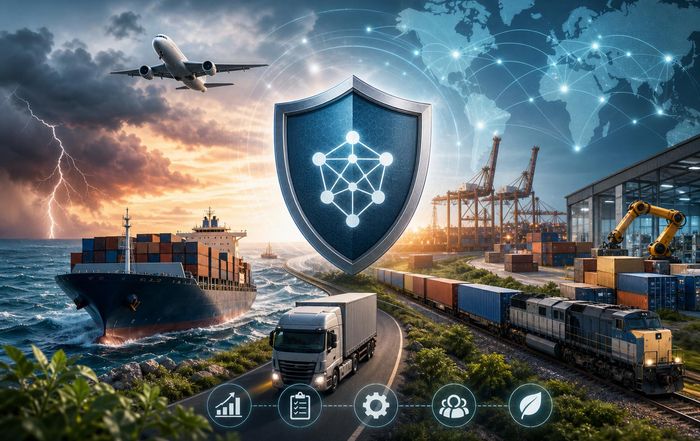
How Companies Build Resilience Against Supply Chain Shocks
Why Supply Chain Resilience Has Become a Strategic Imperative
In an era marked by pandemic disruptions, geopolitical tensions, extreme weather events, cyberattacks, and rapid technological change, supply chains have moved from being a largely operational concern to a central pillar of corporate strategy. Boards, regulators, investors, and customers increasingly expect companies to demonstrate not only efficiency but also resilience: the ability to anticipate, absorb, and adapt to shocks while continuing to deliver products and services reliably.
Research from organizations such as McKinsey & Company and the World Economic Forum indicates that major supply chain disruptions are becoming more frequent and more complex, often combining physical, digital, and financial dimensions. The COVID-19 pandemic exposed vulnerabilities in global just-in-time inventory models, while events such as the Ever Given blockage of the Suez Canal and semiconductor shortages underscored the risks of concentrated production and logistics routes. At the same time, regulators in the United States, Europe, and Asia are tightening expectations around supply chain transparency, sustainability, and human rights, which adds another layer of complexity but also creates an opportunity to build more robust and responsible networks.
For business news, readers, this evolution is more than a backdrop; it is reshaping how businesses plan, invest, and compete. Supply chain resilience now intersects with core themes such as global economic trends, investment decision-making, technology and artificial intelligence, and sustainable business models. Leading organizations are moving from reactive crisis management toward proactive, data-driven resilience strategies designed to protect revenue, margins, and brand reputation over the long term.
From Efficiency to Resilience: A Paradigm Shift
For decades, many companies optimized their supply chains around cost, speed, and lean operations, often relying on single-source suppliers, offshore production, and minimal inventory. This model delivered impressive efficiencies but left little margin for error. As shocks multiplied, a new paradigm began to emerge, in which resilience is treated as an investment rather than a cost.
Reports from the OECD and World Bank suggest that companies are increasingly balancing just-in-time with "just-in-case" approaches, accepting some redundancy and higher short-term expenses to reduce the likelihood and impact of disruptions. This shift does not mean abandoning efficiency altogether; instead, it implies a more nuanced optimization in which risk exposure, recovery speed, and operational flexibility are incorporated into supply chain design.
This transformation is visible across sectors. In automotive and electronics, manufacturers are diversifying sources of critical components such as semiconductors and batteries. In pharmaceuticals and healthcare, firms are reassessing geographic concentration and regulatory dependencies. Retailers and consumer goods companies are investing heavily in demand sensing, logistics visibility, and nearshoring to stay closer to key markets. The move toward resilience is also influencing capital markets, as investors scrutinize supply chain risk in their assessments of corporate value, a trend highlighted in research from BlackRock and MSCI.
Readers seeking a broader view of how these shifts connect to macroeconomic forces can explore related coverage on global business dynamics and stock market responses to disruption at bizfactsdaily.
Mapping Risk: Visibility as the Foundation of Resilience
The first step toward building a resilient supply chain is understanding it in detail. Many companies historically had good visibility into their direct, first-tier suppliers but limited insight into the second and third tiers where critical vulnerabilities often lie. Events such as the 2011 Tōhoku earthquake and subsequent semiconductor disruptions demonstrated that hidden dependencies can have far-reaching consequences.
To address this, leading firms are investing in comprehensive supply chain mapping and risk analytics. Platforms from companies such as Resilinc, Everstream Analytics, and Interos use a combination of public data, supplier disclosures, and artificial intelligence to identify geographic concentrations, single points of failure, and exposure to natural hazards or geopolitical risk. Studies by Gartner and Deloitte highlight that organizations with deeper multi-tier visibility were generally able to respond faster and more effectively to recent disruptions.
Publicly available resources, including the World Economic Forum's work on supply chain resilience and the UNCTAD analyses of global trade flows, help businesses benchmark their exposure against broader patterns. Companies are supplementing these tools with internal data from procurement, logistics, and finance, creating integrated risk dashboards that can be monitored at the executive level.
For BizFactsDaily readers interested in how digital tools and data science are transforming this space, the intersection with artificial intelligence in business operations is especially relevant. Machine learning models are increasingly used to forecast disruptions, estimate lead time variability, and simulate the impact of alternative sourcing or routing strategies, enabling more informed decision-making.
Diversification and Regionalization of Supply Networks
One of the most visible responses to supply chain shocks has been the diversification and regionalization of sourcing and production. Instead of relying on a single country or supplier for critical inputs, companies are developing multi-source strategies that include a mix of global, regional, and local partners.
Analyses from McKinsey, Boston Consulting Group, and the European Commission show accelerating trends toward "nearshoring" and "friend-shoring," particularly in sectors such as electronics, automotive, and pharmaceuticals. For example, several major manufacturers have expanded capacity in Mexico, Eastern Europe, and Southeast Asia to complement or partially substitute production in China, responding to both geopolitical tensions and the desire to shorten supply lines.
This shift is not uniform, and credible sources note that full reshoring to home countries remains relatively limited due to cost, skills, and infrastructure constraints. Instead, companies are designing more distributed networks that balance risk, cost, and market proximity. Regional hubs can serve large nearby markets while still benefiting from global scale, a model supported by policy incentives in regions such as North America and the European Union.
The World Trade Organization and IMF have observed that, despite talk of de-globalization, global trade volumes remain substantial, but their structure is evolving. Supply chain resilience strategies are contributing to a more multipolar trade pattern, with increased roles for countries such as Vietnam, India, Mexico, and several Eastern European and African economies. This transformation has implications for employment and skills, as labor markets adapt to new manufacturing and logistics hubs.
Strategic Inventory and Smart Buffering
Inventory strategies are another critical lever in resilience planning. Traditional lean approaches sought to minimize inventory to free up working capital and reduce carrying costs. However, recent disruptions have demonstrated that overly aggressive inventory reduction can leave companies unable to meet demand when supply is interrupted.
In response, many organizations are adopting more sophisticated inventory segmentation and buffering strategies. Rather than uniformly increasing stock across all items, they identify critical components, high-margin products, and items with long replenishment times, and selectively build buffers around those. Advanced planning systems, often enhanced by AI tools from firms such as Blue Yonder and Kinaxis, help optimize safety stock levels by modeling variability in demand and supply lead times.
Academic research published through platforms like MIT Center for Transportation & Logistics and Harvard Business Review emphasizes that the most resilient companies treat inventory as a strategic asset rather than a static cost. They continuously adjust buffers based on real-time data, scenario analysis, and collaboration with suppliers and customers. This approach can be particularly valuable in sectors where demand is volatile or where disruptions have long recovery times, such as aerospace, healthcare, and high-tech manufacturing.
For investors and financial professionals following BizFactsDaily, the financial implications are significant. Higher strategic inventory may temporarily compress margins, but it can also reduce revenue volatility and protect market share in crises, a trade-off that is increasingly recognized in investment analysis and credit assessments.
Digitalization, AI, and Real-Time Visibility
Digital transformation is arguably the most powerful enabler of modern supply chain resilience. Companies are investing in end-to-end visibility platforms that integrate data from suppliers, logistics providers, manufacturing sites, and customer channels, often in near real time. The goal is to detect disruptions early, respond quickly, and continuously optimize flows.
Technologies such as Internet of Things sensors, cloud-based control towers, and AI-driven analytics are central to this evolution. Major technology providers including Microsoft, SAP, Oracle, and IBM offer supply chain suites that combine planning, execution, and risk management. Start-ups and specialized providers add capabilities such as predictive ETA, anomaly detection, and automated scenario modeling. Independent analysis from Gartner and IDC confirms that adoption of such tools has accelerated, particularly among large multinational corporations.
Artificial intelligence is being used to improve forecasting accuracy, identify patterns that signal emerging disruptions, and recommend mitigation actions. For example, machine learning models can analyze news feeds, weather data, port congestion metrics, and social media signals to flag potential issues before they fully materialize. Natural language processing tools can extract risk-relevant information from supplier communications and regulatory updates. Learn more about how AI is reshaping business operations through bizfactsdaily's coverage of technology and innovation and innovation strategies.
Blockchain technology, while still evolving, is being explored for enhancing traceability and trust in supply chains, especially in sectors such as food, pharmaceuticals, and luxury goods. Initiatives supported by organizations like IBM, Walmart, and the Food and Agriculture Organization (FAO) aim to improve provenance tracking, reduce fraud, and support compliance with regulations related to safety and sustainability. Independent assessments, including those from PwC and World Economic Forum, suggest that blockchain's impact varies by sector and maturity level, with clear benefits in some traceability use cases and more mixed results elsewhere.
Financial Resilience, Banking Relationships, and Risk Transfer
Supply chain shocks are not only operational events; they are also financial shocks that can strain liquidity, working capital, and credit relationships. Companies that build resilience often complement operational measures with financial strategies designed to absorb volatility and protect cash flow.
Supply chain finance programs, developed in partnership with major banks such as HSBC, JPMorgan Chase, and Standard Chartered, allow suppliers to receive early payment based on the buyer's stronger credit profile, improving resilience across the network. Instruments such as trade credit insurance, offered by firms like Euler Hermes and Coface, can mitigate the risk of non-payment in times of stress, although coverage terms and premiums may tighten after major disruptions.
Global institutions including the Bank for International Settlements and World Bank have highlighted the importance of robust banking systems and trade finance capacity in maintaining resilient global trade. Well-structured relationships with financial institutions help companies access emergency liquidity, restructure terms when necessary, and invest in resilience-enhancing projects. Readers can explore how these dynamics intersect with broader banking sector developments and global economic policy through related reporting at BizFactsDaily.
Risk transfer mechanisms, including insurance for business interruption, political risk, and natural catastrophes, also play a role. Industry analyses from Swiss Re and Munich Re indicate growing demand for such coverage, although gaps remain, particularly in emerging markets and for non-physical disruptions such as cyberattacks. Companies that actively manage these instruments as part of their resilience strategy are better positioned to recover financially from shocks.
Supplier Collaboration, Governance, and Ethical Resilience
Resilient supply chains depend on strong, transparent relationships with suppliers. Rather than treating suppliers purely as cost centers, leading companies are building long-term partnerships that emphasize shared risk management, joint planning, and continuous improvement. This approach often includes support for supplier capability building in areas such as quality management, digitalization, and sustainability.
Global frameworks such as the UN Global Compact and the OECD Guidelines for Multinational Enterprises encourage companies to integrate environmental, social, and governance (ESG) considerations into their supply chain management. Regulatory initiatives, including the European Union's Corporate Sustainability Due Diligence Directive and various modern slavery laws in the United Kingdom, Australia, and other jurisdictions, are pushing firms to strengthen oversight of labor conditions, human rights, and environmental impacts in their extended supply chains.
Independent evaluations from bodies like Amnesty International and Human Rights Watch show that significant challenges remain, but they also highlight examples of companies that have made meaningful progress through transparent reporting, supplier audits, and remediation programs. Ethical resilience is increasingly seen as integral to business continuity, as reputational damage, legal penalties, and consumer backlash can be as disruptive as physical supply interruptions.
For BizFactsDaily readers focused on founders and leadership, the governance dimension is particularly important. Boards are establishing dedicated supply chain risk committees, integrating resilience metrics into executive compensation, and ensuring that supply chain strategy aligns with overall corporate purpose and ESG commitments. Coverage on business leadership and strategy at bizfactsdaily regularly emphasizes how these governance structures support long-term value creation.
Sustainability, Climate Risk, and the Future of Resilient Supply Chains
Climate change is emerging as one of the most significant long-term drivers of supply chain risk. Extreme weather events, rising sea levels, and changing precipitation patterns can disrupt production, transportation, and energy supplies. Reports from the Intergovernmental Panel on Climate Change (IPCC) and the International Energy Agency (IEA) warn that physical climate risks are likely to intensify, affecting infrastructure, agriculture, and industrial operations worldwide.
Companies are responding by integrating climate risk assessments into supply chain design. This includes evaluating the exposure of key facilities and routes to floods, storms, heatwaves, and water stress, and considering relocation, hardening, or diversification where necessary. Tools provided by organizations such as CDP and TCFD help companies disclose and manage climate-related risks and opportunities, including those embedded in their supply networks.
At the same time, there is growing recognition that sustainability and resilience can reinforce each other. Investments in energy efficiency, renewable energy, circular economy practices, and sustainable sourcing can reduce dependency on volatile fossil fuel markets, mitigate regulatory risks, and build stronger relationships with communities and stakeholders. Learn more about sustainable business practices and their connection to long-term resilience through BizFactsDaily's dedicated sustainability coverage.
In sectors such as agriculture and food, initiatives supported by the Food and Agriculture Organization (FAO) and World Resources Institute (WRI) promote climate-smart practices that enhance both productivity and resilience. In manufacturing and logistics, low-carbon technologies, including electric vehicles, hydrogen, and advanced materials, are being explored not only for their environmental benefits but also for their potential to reduce exposure to regulatory and fuel price shocks.
Regional Perspectives and Global Interdependence
Although supply chain resilience is a global concern, regional contexts shape how companies respond. In North America and Europe, policy debates often focus on strategic autonomy in areas such as semiconductors, pharmaceuticals, and critical minerals, leading to industrial strategies and incentives aimed at building domestic or allied capacity. Institutions such as the European Commission and U.S. Department of Commerce have launched initiatives to map and strengthen supply chains in these sectors, while industry groups work to balance security with competitiveness.
In Asia, where many global supply chains are anchored, countries such as China, Japan, South Korea, Vietnam, and Singapore are investing in advanced manufacturing, logistics infrastructure, and digital trade platforms to maintain their roles as critical hubs. The Asian Development Bank highlights the importance of regional cooperation and connectivity in sustaining resilient trade, while also noting the need to manage climate and geopolitical risks.
Emerging markets in Africa and South America are increasingly integrated into global value chains for agriculture, mining, and manufacturing. Organizations such as the African Development Bank and Inter-American Development Bank emphasize that building local infrastructure, skills, and governance capacity is essential to ensure that these regions benefit sustainably from shifting supply chain patterns. For readers of BizFactsDaily, these developments connect directly with global business coverage and the evolving landscape of opportunities across continents.
Despite moves toward regionalization and friend-shoring, credible analyses from the WTO, IMF, and leading think tanks underline that deep global interdependence will remain a defining feature of the world economy. Resilience strategies must therefore balance diversification with cooperation, building redundancy where necessary while preserving the efficiencies and innovation benefits of global trade.
The Role of Innovation, Start-ups, and New Business Models
Innovation is at the heart of supply chain resilience, not only in technology but also in business models and ecosystem design. Start-ups and digital platforms are offering new ways to match supply and demand, share capacity, and manage risk. Marketplaces for excess inventory, on-demand warehousing, and flexible manufacturing capacity help companies respond to sudden shifts in demand or supply constraints.
Companies in logistics and transportation are experimenting with autonomous vehicles, drones, and advanced routing algorithms to improve reliability and reduce dependence on specific chokepoints. Research institutions and industry consortia collaborate on standards and interoperability, recognizing that resilience often depends on coordinated action across multiple actors rather than isolated efforts.
For entrepreneurs and founders, profiled regularly on bizfactsdaily's founders and innovation pages, supply chain challenges present opportunities to create value by solving real, complex problems. Solutions that increase transparency, reduce friction, and align incentives across networks are attracting attention from venture capital and corporate investors, reflecting a belief that resilient supply chains will be a competitive differentiator for years to come.
Building a Culture of Resilience: People, Processes, and Leadership
Ultimately, supply chain resilience is not only about tools and structures; it is about people, culture, and leadership. Organizations that responded most effectively to recent crises tended to have cross-functional collaboration, empowered local decision-making, and a culture that encourages learning from disruptions rather than simply reverting to old patterns once a crisis passes.
Continuous scenario planning, regular stress testing, and simulation exercises help teams prepare for low-probability but high-impact events. Training programs and clear governance frameworks ensure that roles and responsibilities are understood when rapid action is required. Leadership commitment is crucial: when executives treat resilience as a strategic priority, it becomes embedded in investment choices, performance metrics, and day-to-day operations.
For all the fans coming here, especially those in leadership roles, the message is clear. Supply chain resilience is no longer a niche concern of logistics departments; it is a central element of corporate strategy, risk management, and long-term value creation. By leveraging data, technology, financial tools, partnerships, and a strong ethical foundation, companies can build supply networks that are not only more robust in the face of shocks but also more innovative, sustainable, and aligned with stakeholder expectations.
As the world navigates an increasingly uncertain environment, organizations that invest thoughtfully in resilient supply chains will be better positioned to protect their customers, employees, and shareholders, while contributing to a more stable and inclusive global economy. BizFactsDaily will continue to follow these developments closely across its coverage of business and markets, helping readers connect strategic insight with practical action.
