
Employment in 2026: How Automation Is Rewriting the Global Future of Work
As 2026 progresses, the employment landscape is shifting even faster than many executives and policymakers anticipated just a few years ago, and for the global business audience of BizFactsDaily, this shift is no longer an abstract forecast but a day-to-day operating reality that cuts across artificial intelligence, banking, business services, crypto, the broader economy, employment and technology. What began as an acceleration of automation and AI adoption in the wake of the pandemic has now matured into a structural transformation that is redefining how organizations in the United States, the United Kingdom, Germany, Canada, Australia, France, Italy, Spain, the Netherlands, Switzerland, China, Singapore, South Korea and beyond design work, allocate capital, build skills and compete in increasingly digital and data-driven markets, a transformation that BizFactsDaily tracks closely through its coverage of artificial intelligence, technology, employment and the economy.
From Automation to Intelligent Work Recomposition
By 2026, automation has evolved from a set of discrete tools into a pervasive layer of intelligence embedded across workflows, platforms and physical operations, and this evolution is reshaping employment not only through task replacement but through what many analysts now describe as intelligent work recomposition. Instead of simply substituting machines for repetitive human tasks, organizations in North America, Europe and Asia are redesigning end-to-end processes so that generative AI systems, advanced analytics and robotics orchestrate information flows, trigger decisions and coordinate human contributions in finance, healthcare, logistics, manufacturing, retail and professional services. The World Economic Forum has continued to highlight this shift in its evolving Future of Jobs analyses, and executives seeking to understand how task structures and job families are being redefined globally can review the latest Future of Jobs reports and dashboards to see how exposure to AI and automation varies by sector and region.
For readers of BizFactsDaily, this new phase of automation is visible in the way organizations now integrate large language models into customer service and knowledge management, deploy computer vision in quality control and warehouse management, and embed predictive algorithms in everything from credit scoring and insurance underwriting to workforce scheduling and marketing optimization, a convergence that is explored across the platform's sections on business, banking, stock markets and innovation. Rather than a binary narrative of jobs lost or created, 2026 is characterized by a granular reallocation of tasks within roles, with AI handling the pattern recognition, summarization and routine coordination functions, while human workers focus more intensely on complex decision-making, relationship building, ethical judgment and cross-functional problem-solving.
Sector Transformations and the Emergence of Hybrid Roles
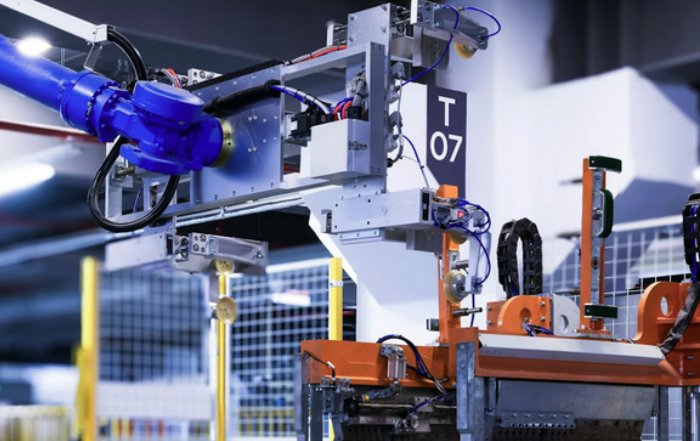
Sectoral differences have become even more pronounced, with automation reshaping employment in manufacturing, services and the digital economy in distinct but interconnected ways. In manufacturing hubs such as Germany, Japan, South Korea and China, robot density and AI-enabled production systems continue to climb, and the International Federation of Robotics documents how collaborative robots, machine vision and predictive maintenance are altering skill requirements on factory floors; leaders can review the latest robotics deployment statistics and industry reports to gauge where the most rapid displacement and upskilling pressures are emerging. At the same time, advanced economies in Europe and North America are increasingly using automation not solely to reduce headcount but to compensate for aging workforces and chronic shortages in skilled trades, logistics and healthcare support roles.
Knowledge-intensive sectors, including finance, law, marketing, software development and consulting, are experiencing a different kind of disruption as generative AI from organizations such as OpenAI, Google DeepMind and Anthropic automates portions of research, drafting, analysis and client interaction. Marketing teams in the United States, the United Kingdom, Canada and Australia now rely on AI to generate and test campaign variants, personalize content at scale and optimize media spend in real time, while human professionals concentrate on brand positioning, narrative coherence and cross-channel strategy. Executives seeking benchmarks on these practices can explore resources such as HubSpot's evolving State of Marketing research, which illustrates how AI adoption is reshaping marketing organizations across industries.
This fusion of human expertise and machine intelligence is giving rise to a wave of hybrid roles that sit at the intersection of technology, business and operations, including AI product managers, automation architects, data governance leads, human-in-the-loop designers and algorithmic risk officers. These roles demand a blend of technical literacy, domain insight and interpersonal capability that aligns closely with the themes BizFactsDaily covers under innovation and employment, and they are expanding rapidly in digitally advanced economies such as the Netherlands, Sweden, Denmark, Singapore and Finland, where education systems and corporate learning cultures have been quicker to emphasize interdisciplinary skill development and continuous reskilling.
Regional Divergence and Convergence in the Global Labor Market
The geography of automation's impact has grown more complex, combining regional divergence with new forms of global convergence. In North America and Western Europe, tight labor markets, demographic aging and inflationary pressures have pushed organizations in healthcare, logistics, construction and hospitality to adopt automation as a strategic response to persistent vacancies and rising wage bills, often positioning AI and robotics as complements to scarce human labor rather than outright substitutes. The OECD continues to analyze how these dynamics influence productivity, wages and inequality, and decision-makers can examine comparative labor market and skills data to see how different policy regimes are moderating the impact of automation on employment outcomes.
Across emerging economies in Asia, Africa and South America, including India, Brazil, South Africa, Malaysia and Thailand, governments and businesses face the dual challenge of creating sufficient employment for young and expanding populations while also integrating automation to remain competitive in global supply chains and digital services. In export-oriented manufacturing regions, there is ongoing debate about whether rapid automation could undercut the labor-intensive development model that powered the rise of East Asian economies, while in service-led economies there is concern that offshoring advantages may erode as advanced economies use AI to reshore or internalize tasks such as customer support, basic coding and back-office processing. The International Labour Organization provides detailed research on how automation interacts with development strategies, and stakeholders can explore its future of work resources to understand the policy levers available to mitigate risks and expand opportunity.
At the same time, advanced digital economies such as Singapore, South Korea, Japan and the Nordic countries are positioning themselves as laboratories for human-centric automation, experimenting with national lifelong learning systems, portable training accounts, AI ethics frameworks and redesigned social safety nets. For a global readership that spans the United States, Europe, Asia, Africa, South America and Oceania, BizFactsDaily uses its global and news coverage to highlight how these policy experiments influence corporate strategy, investment flows and employment models across borders, underscoring that while the pace and form of automation differ by region, the underlying strategic questions facing business leaders are increasingly shared.
Skills, Capabilities and the New Currency of Employability
In 2026, employability is defined less by static qualifications and more by dynamic capabilities, with organizations and workers converging on the view that continuous skill renewal is essential in an environment where AI systems can absorb new knowledge at unprecedented speed. Employers in the United States, the United Kingdom, Germany, Canada, Australia and across Asia now consistently emphasize critical thinking, complex problem-solving, creativity, collaboration, emotional intelligence and cross-cultural communication as differentiators, particularly in roles that require interpreting AI outputs, making judgment calls under uncertainty and coordinating multi-disciplinary teams. These human-centered capabilities sit alongside technical proficiencies in data literacy, AI tool usage, prompt engineering, cybersecurity awareness and basic programming, forming a combined skillset that is increasingly seen as the foundation of resilient careers.
Global learning platforms such as Coursera, edX and Udacity, in partnership with universities and corporations, have expanded their catalogues of micro-credentials, professional certificates and modular degrees that target AI, data science, cloud computing and digital leadership, making it easier for mid-career professionals to adapt without leaving the workforce. Business leaders and employees seeking structured pathways into these domains can explore curated offerings such as online data and AI courses, which illustrate how formal education and on-the-job learning are converging into a more flexible ecosystem. For organizations, the ability to build internal academies, fund external training and integrate learning into daily workflows is becoming a core element of talent strategy, a theme that resonates strongly with the insights BizFactsDaily shares in its employment, investment and business sections.
In heavily regulated sectors such as banking, healthcare and aviation, a new emphasis has emerged on "AI fluency" that goes beyond tool usage to encompass understanding of model limitations, bias risks, explainability requirements and compliance obligations. Institutions such as the MIT Sloan School of Management and Harvard Business School have developed case studies and executive programs focusing on human-AI collaboration and algorithmic governance, and leaders can gain practical perspectives by engaging with resources like the MIT Sloan Management Review's coverage of AI and work, which documents how forward-looking organizations are redesigning roles, incentives and performance metrics to harness AI responsibly.
Automation as a Core Element of Corporate and Board Strategy
For large enterprises and fast-growing scale-ups alike, automation has become a board-level strategic priority, integrated into decisions about capital expenditure, mergers and acquisitions, organizational design and risk management. Executives in banking, manufacturing, retail, logistics, technology and professional services now routinely present automation roadmaps to their boards, detailing how AI platforms, robotics and digital workflows will reshape cost structures, operating margins and innovation capacity over three- to seven-year horizons. Investors following BizFactsDaily's stock markets and news coverage can see this emphasis reflected in earnings calls, capital allocation disclosures and valuation narratives, where the ability to deploy automation at scale is increasingly treated as a proxy for long-term competitiveness.
Boards are also being asked to oversee the ethical and social dimensions of automation, including workforce impacts, algorithmic fairness, data governance and reputational risk. Organizations such as the World Economic Forum and the Institute of Business Ethics have developed principles and toolkits for responsible AI and automation governance, and directors seeking structured guidance can review initiatives such as the WEF's AI governance alliance materials, which outline frameworks for aligning automation strategies with stakeholder expectations and regulatory developments. For multinational companies operating across North America, Europe and Asia, this governance challenge is compounded by the need to navigate differing legal regimes on data privacy, algorithmic transparency and labor rights, making close collaboration between technology leaders, legal teams, HR and public policy functions essential.
Policy, Regulation and the Redesign of Social Contracts
Governments in advanced and emerging economies alike are moving from observation to intervention as automation's employment effects become more visible, experimenting with regulatory frameworks, incentive schemes and social policy reforms that seek to balance innovation with protection. In the European Union, the finalization and phased implementation of the AI Act, alongside digital markets and services regulations, has signaled a robust commitment to ensuring that AI and automation respect fundamental rights, safety and transparency, while member states such as Germany, France, Italy, Spain and the Netherlands continue to invest heavily in vocational training, apprenticeships and digital inclusion initiatives. Policymakers, executives and researchers can track these developments through the European Commission's digital and AI policy strategy resources, which provide insight into how regulatory expectations are likely to evolve for businesses deploying AI across the EU.
In the United States, a combination of federal guidance, executive actions and state-level initiatives is shaping a more decentralized but increasingly coordinated approach to AI risk management, workforce transition and data governance, with agencies such as the U.S. Department of Labor and the National Institute of Standards and Technology playing prominent roles. Organizations designing or procuring AI systems can look to frameworks such as NIST's AI Risk Management Framework, which offers practical guidance on identifying, measuring and mitigating risks across the AI lifecycle. Similar efforts are underway in Canada, the United Kingdom, Singapore, Japan and South Korea, where governments aim to position their economies as trusted hubs for AI and digital innovation while addressing concerns over job displacement, surveillance and inequality.
At a broader level, debates over universal basic income, negative income tax, wage insurance, portable benefits, shorter workweeks and new forms of worker representation have intensified as policymakers grapple with the possibility that automation could both raise aggregate productivity and concentrate gains in ways that exacerbate social tensions. For BizFactsDaily readers who follow economy and global trends, these debates underscore that the future of work is inseparable from the future of social contracts, tax systems and public investment in education, healthcare and infrastructure, and that business leaders will increasingly be expected to participate constructively in these conversations.
Wellbeing, Identity and Inclusion in an Automated Era
Beneath the macroeconomic and regulatory narratives lies the lived experience of workers whose daily routines, career trajectories and sense of identity are being reshaped by automation. Surveys conducted in recent years by organizations such as Pew Research Center and Gallup reveal a nuanced picture in which many workers appreciate the potential of AI and automation to reduce monotonous tasks, improve safety and enable flexible work, yet also express concern about job security, skill redundancy and the erosion of human connection in highly digital environments. Those interested in understanding these perceptions in more depth can examine Pew's research on public attitudes toward AI and automation, which highlights variations by age, education, income and geography.
These psychological and social dimensions are particularly acute in high-skill professions such as law, medicine, journalism, software engineering and financial analysis, where expertise has traditionally been closely linked to mastery of complex information and specialized techniques that AI systems now partially replicate. As generative models draft legal memos, interpret medical images, summarize financial reports and generate code, professionals are compelled to redefine their unique value in terms of judgment, empathy, ethical reasoning, contextual understanding and the ability to integrate diverse inputs into coherent strategies. For employers, supporting this transition requires transparent communication about automation plans, co-design of new workflows with affected teams, meaningful opportunities for reskilling and visible leadership commitment to human development rather than purely cost-driven automation.
Inclusion remains a critical concern, as automation has the potential to amplify existing inequalities if access to reskilling, digital infrastructure and quality jobs remains uneven across regions and demographic groups. Workers in routine, lower-wage roles in sectors such as retail, basic manufacturing and administrative support are often more exposed to displacement and less likely to have access to high-quality training or career transition support. Institutions such as the World Bank have warned about the risk of a widening digital and automation divide, and stakeholders can consult its analyses on jobs and development in the age of technology to explore policy and investment strategies that promote more inclusive digital transformation. For BizFactsDaily, whose audience spans countries from South Africa and Brazil to Malaysia and New Zealand, highlighting case studies and policies that successfully integrate inclusion into automation strategies is central to maintaining trust and providing actionable, globally relevant insight.
Automation, Founders and the Changing Face of Entrepreneurship
While established firms grapple with the complexities of large-scale automation, founders and early-stage ventures are leveraging AI and automation as foundational building blocks of new business models, often redefining what a "lean" startup looks like in 2026. Low-code and no-code platforms, AI-as-a-service offerings and composable software architectures enable small teams in hubs such as Silicon Valley, Austin, London, Berlin, Toronto, Singapore, Sydney and Tel Aviv to build products and services that would previously have required large engineering organizations, allowing founders to focus their scarce human capital on customer discovery, product vision and ecosystem partnerships.
Automation is also transforming how startups access capital and scale, as venture capital and private equity firms deploy AI tools to source deals, monitor portfolios and identify sectoral inflection points. Data platforms such as PitchBook and Crunchbase offer increasingly sophisticated analytics on funding flows, valuations and exit patterns, and entrepreneurs and investors can explore market intelligence on AI and automation-driven startups to understand where capital is concentrating and which business models are gaining traction. For readers of BizFactsDaily, the platform's founders and innovation sections provide complementary, narrative-driven insight into how entrepreneurs are using automation not only to disrupt incumbents but also to reimagine work design, talent models and organizational culture from the ground up.
Crypto, Fintech and the Automation of Financial Workflows
In the financial sector, automation is intersecting with the ongoing evolution of crypto assets, decentralized finance and advanced fintech platforms to create a highly dynamic employment environment. Traditional banks, insurers and asset managers are deploying AI to automate compliance checks, transaction monitoring, risk modeling, customer service and portfolio optimization, while at the same time experimenting with tokenization, real-time settlement and embedded finance. For readers who follow BizFactsDaily's coverage of crypto, banking and investment, the convergence of automation and digital finance raises questions about which roles will shrink, which will grow and how regulatory expectations will evolve.
On the crypto and DeFi side, smart contracts and algorithmic governance mechanisms are automating not just tasks but entire financial processes, from market-making and lending to collateral management and yield optimization, creating new categories of work around protocol design, auditing, governance, security and regulatory compliance. Supervisory bodies such as the U.S. Securities and Exchange Commission, the Financial Conduct Authority in the United Kingdom and the European Securities and Markets Authority have been intensifying their focus on digital finance and algorithmic trading, and professionals can track policy developments through resources such as ESMA's digital finance policy hub, which sheds light on how oversight of automated financial systems is likely to tighten. As back-office and routine analytical roles become more automated, new opportunities are emerging in AI model validation, algorithmic auditing, digital asset risk management and cybersecurity, reshaping the skills profile of financial employment globally.
Sustainability, Automation and the Quality of Growth
Sustainability has moved from a peripheral concern to a central axis along which automation strategies are being evaluated, as investors, regulators and customers increasingly expect that digital transformation will contribute to, rather than undermine, environmental and social goals. Automation can significantly enhance resource efficiency by optimizing energy consumption in industrial processes, reducing waste in supply chains, enabling predictive maintenance of critical infrastructure and supporting circular business models in sectors such as manufacturing, mobility and consumer goods. Organizations looking to align automation with sustainability can draw on frameworks and guidance from bodies such as the United Nations Global Compact and the OECD, and can learn more about sustainable business practices that integrate technology deployment with climate and social commitments.
At the same time, the environmental footprint of large-scale AI and digital infrastructure cannot be ignored, as data centers, network equipment and hardware manufacturing consume significant energy and materials, raising questions about the net impact of automation on emissions and resource use. Investors and rating agencies are increasingly scrutinizing how companies manage the energy intensity of AI workloads, procure renewable energy, design circular hardware strategies and ensure responsible supply chains for critical minerals. For BizFactsDaily, whose sustainable and technology sections explore this intersection in depth, the key message for business leaders is that automation, sustainability and long-term value creation are now inseparable: strategies that ignore environmental and social externalities risk regulatory backlash, capital penalties and reputational damage, while those that integrate sustainability into automation roadmaps can unlock new sources of resilience and competitive differentiation.
Strategic Imperatives for Business Leaders in 2026
For the global audience of BizFactsDaily, spanning corporate executives, founders, investors, policymakers and professionals across continents, the acceleration of automation in 2026 crystallizes into a set of strategic imperatives that go well beyond technology procurement. Organizations that thrive in this environment will treat automation as a catalyst for reimagining value creation, workforce development and stakeholder engagement, rather than as a narrow cost-cutting exercise, and will invest in building capabilities that allow them to iterate responsibly as technologies, regulations and social expectations evolve.
This implies committing to robust skills strategies that blend technical literacy with human-centered capabilities, designing work so that humans and machines complement rather than compete with each other, embedding ethical and governance considerations into AI deployment, engaging transparently with employees about the pace and direction of change, and aligning automation initiatives with broader sustainability and inclusion goals. It also implies staying informed about global policy and regulatory developments, understanding how automation is reshaping competitive dynamics within and across sectors, and learning from both leading and lagging examples around the world.
As automation continues to transform employment across artificial intelligence, banking, business services, crypto, the broader economy and the technology sector, BizFactsDaily will remain focused on providing in-depth, trustworthy and forward-looking analysis, drawing on its coverage of artificial intelligence, employment, technology, business and economy. For decision-makers navigating this era of intelligent work recomposition, the ability to combine strategic clarity with operational agility, ethical responsibility and a long-term view of human potential will be the defining test of leadership in the years ahead.
