
Innovation in Sustainable Materials and Manufacturing: Redefining Global Competitiveness
A New Industrial Era Shaped by Sustainability?
Sustainability has moved from the margins of corporate strategy to the core of industrial competitiveness, and nowhere is this shift more visible than in the rapid innovation unfolding in sustainable materials and manufacturing. What was once framed as a compliance burden is now widely recognised by executives, investors and policymakers as a primary engine of long-term value creation, risk management and differentiation across global markets. With a particular focus on the intersection of technology, finance and regulation, sustainable materials have become a reliable lens through which to understand which companies and countries are positioning themselves to lead the next industrial era.
The acceleration is driven by converging pressures: tightening regulations on carbon and waste, growing customer expectations in the United States, Europe and Asia, rising energy and commodity price volatility, and the increasing scrutiny of investors who now routinely integrate environmental, social and governance metrics into capital allocation decisions. According to the International Energy Agency, industry still accounts for more than a quarter of global energy use and emissions, and the agency's latest pathways for net-zero underscore that deep innovation in materials and processes is indispensable if the world is to meet climate targets. Readers who follow global economic transitions can see that the companies re-engineering their material inputs and production systems today are effectively rewriting the cost curves and risk profiles that will define markets over the coming decade.
The Strategic Business Case for Sustainable Materials
For multinational manufacturers in the United States, Germany, China and beyond, the argument for sustainable materials has become less about corporate social responsibility and more about strategic resilience and margin protection. The volatility of fossil-based feedstocks, rising carbon prices in systems such as the EU Emissions Trading System, and supply chain disruptions exposed during the pandemic have collectively shown that linear, resource-intensive models are structurally fragile. Analyses by organizations such as the World Economic Forum illustrate how circular and low-carbon material strategies can unlock trillions of dollars in economic value by 2030, largely through resource efficiency, waste reduction and new service-based business models. Learn more about sustainable business practices through global policy perspectives on the OECD website, which increasingly highlight material efficiency as a core pillar of industrial policy.
At the same time, regulatory frameworks in the European Union, the United Kingdom, Canada and several Asia-Pacific economies are pushing manufacturers to disclose and reduce lifecycle emissions, toxic substances and waste, effectively transforming sustainability performance into a license to operate. The U.S. Securities and Exchange Commission has advanced climate-related disclosure rules that, while still evolving, have already prompted major listed companies to quantify the material and process choices underpinning their emissions footprints. For readers of BizFactsDaily following investment trends, this shift is particularly relevant: institutional investors now routinely ask whether companies have credible plans to transition to low-carbon materials, understanding that stranded assets and regulatory penalties can erode long-term returns.
Advanced Bio-Based Materials and the Next Generation of Polymers
Among the most dynamic frontiers in 2026 is the development of advanced bio-based materials designed to replace fossil-derived plastics, resins and fibers in sectors ranging from packaging and consumer goods to automotive and construction. Researchers and industrial consortia are moving beyond first-generation bioplastics to engineer polymers with tailored mechanical, thermal and barrier properties that can compete directly with petrochemical incumbents in performance-critical applications. Institutions such as MIT and ETH Zurich have published extensive work on bio-based composites, showing how lignin, cellulose and chitin can be combined with bio-derived resins to produce high-strength, lightweight materials suitable for mobility and infrastructure applications.
For companies in Europe and North America, bio-based content is no longer pursued solely for marketing advantage; it is increasingly a response to policy instruments such as extended producer responsibility schemes and plastic taxes that penalize non-recyclable or non-renewable materials. In markets such as Germany, France and the Netherlands, where consumer awareness of environmental impacts is high, retailers are pressuring suppliers to adopt certified bio-based or recyclable solutions, backed by standards from organizations like TÜV Rheinland and DIN. Learn more about evolving standards and certification frameworks through the European Commission's circular economy resources, which outline how bio-based materials fit into broader industrial decarbonization strategies.
Asia is also emerging as a critical hub for bio-materials innovation. In Japan and South Korea, chemical companies are leveraging decades of polymer expertise to develop drop-in bio-based alternatives that integrate with existing production lines, reducing capital expenditure barriers for adoption. Meanwhile, in Brazil, Thailand and Malaysia, agricultural by-products such as bagasse, palm residues and cassava starch are being upgraded into higher-value material feedstocks, creating new revenue streams for rural economies and diversifying export portfolios. This evolution is closely monitored by BizFactsDaily in its global coverage, as it reveals how emerging markets can move up the value chain by pairing resource endowments with advanced processing technologies.
Circular Metals, Low-Carbon Cement and the Reinvention of Heavy Materials
Beyond polymers, some of the most consequential innovations are occurring in heavy materials such as steel, aluminum and cement, which collectively account for a significant share of industrial emissions. Companies like SSAB in Sweden and ArcelorMittal in Europe and North America are piloting hydrogen-based direct reduction processes that dramatically cut emissions compared with conventional blast furnaces, supported by public-private partnerships and green hydrogen strategies in countries like Sweden, Norway and Germany. The International Renewable Energy Agency has documented how rapidly falling renewable power costs are improving the economics of such low-carbon metal production, making it increasingly viable for export-oriented economies that wish to preserve industrial competitiveness under tightening carbon border adjustment mechanisms.
In the cement sector, innovation is focusing on clinker substitution, alternative binders and carbon capture integration. Companies in the United Kingdom, Canada and Australia are exploring calcined clay, industrial by-products and even carbon-mineralized aggregates to lower the embodied carbon of concrete without compromising structural performance. The Global Cement and Concrete Association provides detailed roadmaps that demonstrate how material innovation, combined with process efficiency and carbon utilization, can halve sectoral emissions by mid-century. For infrastructure-heavy economies like the United States, India and China, where urbanization and renewal continue at scale, these material shifts are vital to aligning construction pipelines with national climate commitments.
Recycling and circularity are also being redefined through digital technologies and advanced sorting. Modern facilities, particularly in Europe and East Asia, deploy near-infrared spectroscopy, robotics and machine learning to separate metals and composites with far greater precision than traditional systems, increasing recovery rates and improving the quality of secondary materials. Readers interested in how artificial intelligence is embedded in industrial operations can explore analyses on AI-driven transformation, which increasingly highlight materials recovery and quality control as high-value use cases that combine sustainability with cost savings.
Digital Manufacturing, AI and the Rise of "Sustainable by Design"
In 2026, sustainable manufacturing is inseparable from the broader digitalization of industry. The convergence of artificial intelligence, industrial internet of things, edge computing and advanced analytics has enabled manufacturers to design, simulate and optimize products and processes with unprecedented precision, often long before physical prototypes are built. This "sustainable by design" paradigm allows engineers in the United States, Germany, Singapore and elsewhere to evaluate material choices, geometries and manufacturing routes against criteria such as carbon footprint, recyclability, durability and cost in a single integrated environment.
Leading software and cloud providers, including Siemens, Dassault Systèmes and Microsoft, are embedding lifecycle assessment modules into their design and manufacturing platforms, so that sustainability metrics become as visible and actionable as cost and lead time. Studies shared by the Ellen MacArthur Foundation show that design decisions determine up to 80 percent of a product's environmental impact, underscoring why digital tools that inform early-stage choices are so influential in shifting entire value chains. For BizFactsDaily readers following technology and innovation, these developments demonstrate how software and data are now core levers of material sustainability, not merely adjuncts to physical production.
On the factory floor, AI-enabled predictive maintenance, process control and quality inspection are reducing scrap rates, energy use and unplanned downtime. In advanced manufacturing centers from the United States and Canada to Japan and South Korea, vision systems trained on millions of images detect micro-defects in materials, while reinforcement learning algorithms fine-tune process parameters in real time to minimize waste. The World Bank has highlighted how such digital optimization can significantly improve resource productivity in emerging markets as well, provided there is adequate investment in skills and infrastructure. For companies featured in BizFactsDaily's employment coverage, this trend raises important workforce questions about reskilling, human-machine collaboration and the distribution of productivity gains.
Materials & Manufacturing
Additive Manufacturing and Localized, Resource-Efficient Production
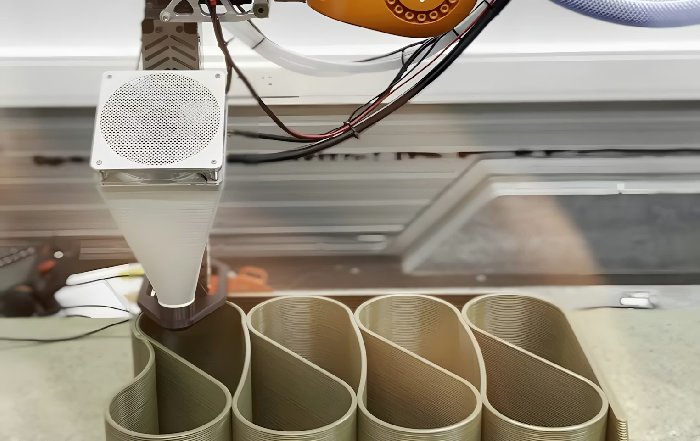
Additive manufacturing, or industrial 3D printing, has matured from prototyping to full-scale production in aerospace, medical devices, automotive and increasingly construction, with profound implications for sustainable materials. By building components layer by layer, additive techniques inherently reduce material waste compared with subtractive machining, while also enabling lightweight geometries that lower energy consumption during use, particularly in transportation and aviation. Organizations such as NASA, Airbus and Boeing have documented substantial weight savings and part consolidation benefits from additive components, translating into lower fuel burn and lifecycle emissions.
In Europe, the United States and Asia, research institutes and startups are experimenting with recycled powders, bio-based resins and even locally sourced aggregates for additive processes, creating pathways for more circular and regionally tailored production. The Fraunhofer Society in Germany and NIST in the United States publish extensive work on additive standards and material performance, helping de-risk adoption for conservative industries such as medical and aerospace that operate under stringent certification regimes. For readers tracking innovation-driven business models, additive manufacturing also supports more distributed production networks, reducing logistics emissions and enabling on-demand manufacturing closer to end markets in Europe, North America, Asia and Africa.
Construction is an emerging frontier, with 3D-printed concrete and composite structures being piloted in the Netherlands, the United Arab Emirates and the United States. By combining optimized geometries with low-carbon cements and recycled aggregates, these approaches promise to reduce both material intensity and construction time. Learn more about advanced manufacturing trends and their economic impact through the OECD's industry and innovation reports, which highlight how policy frameworks can support the diffusion of these technologies to small and medium-sized enterprises that form the backbone of many national economies.
Supply Chain Transparency, Blockchain and Trust in Material Claims
As sustainable materials proliferate, trust in the underlying claims has become a strategic issue for brands, regulators and consumers. Mislabelled recycled content, unverifiable bio-based sourcing and opaque carbon accounting can erode confidence and invite regulatory action, particularly in markets such as the European Union, the United Kingdom and Canada, where greenwashing enforcement is tightening. In response, companies are investing heavily in supply chain transparency tools that combine digital product passports, blockchain-based traceability and third-party verification.
Organizations like GS1 are working on standards for digital identifiers that carry material composition, origin, processing and recyclability information across borders and industries. Blockchain pilots, particularly in metals, textiles and packaging, allow buyers in Germany, the United States or Japan to verify that the aluminum or cotton they purchase meets agreed sustainability criteria, backed by auditable transaction histories. The World Resources Institute and related platforms provide guidance on how to align such traceability systems with broader greenhouse gas accounting frameworks, ensuring that material transparency feeds directly into credible climate reporting.
For BizFactsDaily, which covers banking and financial sector shifts, this transparency trend is deeply intertwined with sustainable finance. Banks and asset managers increasingly require verifiable data on material sourcing and process emissions to structure green loans, sustainability-linked bonds and transition finance instruments. Without robust traceability and verification, the risk of misallocated capital and reputational damage rises, particularly as regulators in Europe and North America sharpen their focus on the integrity of sustainable finance products.
Regional Dynamics: How Countries Are Competing in Sustainable Manufacturing
The geography of innovation in sustainable materials and manufacturing is complex and evolving, with distinct regional strengths and policy approaches shaping competitive positions. The European Union, led by countries such as Germany, Sweden, Denmark and the Netherlands, has positioned itself as a regulatory and technology leader through the European Green Deal, circular economy action plans and substantial public funding for green industrial innovation. These frameworks create both obligations and opportunities for manufacturers, pushing them toward low-carbon materials while offering support for research, pilot projects and scaling.
The United States, propelled by legislation such as the Inflation Reduction Act and bipartisan infrastructure investments, has focused on catalyzing domestic clean manufacturing capacity, including low-carbon steel, aluminum, batteries and building materials. Tax credits and grants have attracted significant private capital to industrial hubs in states like Texas, Ohio and Michigan, where new plants are often designed from the ground up with advanced digital and sustainability features. Learn more about the macroeconomic implications of these shifts through analyses published by the U.S. Department of Energy, which tracks industrial decarbonization progress and remaining technology gaps.
In Asia, China remains a central player, both as the world's largest manufacturing base and as a rapidly advancing innovator in batteries, solar materials, rare earth processing and electric vehicles. At the same time, countries such as Japan, South Korea and Singapore are carving out niches in high-precision, high-value sustainable materials, often supported by strong public-private research ecosystems and targeted industrial strategies. In the Global South, emerging economies including Brazil, South Africa, India and Indonesia are exploring how to leverage natural resources, growing domestic markets and south-south collaboration to build competitive positions in bio-materials, recycling and modular, low-carbon construction. For readers of BizFactsDaily following global and regional shifts, these dynamics underscore that sustainable materials are not just an environmental agenda but a core axis of geopolitical and trade strategy.
Financing the Transition: Capital, Risk and New Business Models
No discussion of innovation in sustainable materials and manufacturing is complete without examining how it is financed. The capital intensity and technology risk associated with new materials and processes can be substantial, particularly for first-of-a-kind plants or large-scale retrofits of existing facilities. Development banks, export credit agencies and blended finance vehicles are playing a growing role in de-risking these investments, especially in emerging markets where the cost of capital remains high. Institutions like the European Investment Bank and the International Finance Corporation have launched dedicated facilities for industrial decarbonization, often tied to clear performance milestones and disclosure requirements.
Private capital is also flowing into the space, driven by venture funds focused on climate tech, corporate venture arms of industrial incumbents, and infrastructure investors seeking long-term, inflation-linked returns from low-carbon assets. For readers tracking stock markets and capital flows through BizFactsDaily, it is notable that listed companies with credible sustainable materials strategies often enjoy valuation premiums, reflecting investor expectations of future regulatory alignment and customer demand. However, these premiums are contingent on transparency, execution and governance; markets are increasingly unforgiving of exaggerated claims or under-delivered roadmaps.
New business models are emerging as well. Material-as-a-service offerings, where providers retain ownership of high-value materials and manage their recovery and reuse, are gaining traction in sectors such as office furniture, lighting and industrial equipment, particularly in Europe and North America. Performance-based contracts incentivize durability and reparability, aligning economic incentives with resource efficiency. Learn more about such circular business models and their policy context through the UN Environment Programme, which documents how governments and companies are experimenting with extended producer responsibility and right-to-repair legislation.
The Role of Leadership, Culture and Workforce Transformation
Technology and capital are necessary but not sufficient conditions for successful innovation in sustainable materials and manufacturing; leadership, culture and workforce capabilities are equally decisive. Boards and executive teams in the United States, the United Kingdom, Germany, Canada, Australia and beyond are increasingly expected to demonstrate literacy in climate and resource risk, integrate sustainability into core strategy and oversee credible transition plans. Governance codes and stewardship expectations, articulated by bodies such as the Financial Reporting Council in the UK and investor coalitions worldwide, are making sustainability competence a board-level requirement rather than a discretionary attribute.
Within organizations, cross-functional collaboration between R&D, procurement, operations, finance and marketing is essential to translate material innovations into scalable, marketable solutions. Procurement teams must be empowered to prioritize lifecycle value over simple unit cost, while marketing and sales must be equipped to communicate the benefits of sustainable materials without overpromising. For readers focused on founders and entrepreneurial leadership, the current moment offers a window into how visionary leaders can align purpose, product and process to build brands that resonate with increasingly sustainability-conscious customers and employees.
Workforce transformation is another critical dimension. Engineers, technicians and operators require new skills in data analysis, digital tools, materials science and systems thinking to design and run sustainable manufacturing systems. Governments and companies in countries such as Singapore, Denmark, Finland and the Netherlands are investing heavily in vocational training, lifelong learning and public-private education partnerships to close these capability gaps. The International Labour Organization provides guidance on managing the social dimensions of this transition, emphasizing just transition principles that aim to ensure that workers and communities are supported as industries evolve.
Forward We Go: Strategic Priorities for Business
As the year progresses, it is evident to the editorial team that innovation in sustainable materials and manufacturing is not a passing trend but a structural transformation that will define competitive advantage across sectors and geographies. Companies that treat sustainability as a peripheral marketing issue, or that focus solely on incremental efficiency gains, risk being outpaced by peers who integrate material innovation, digital technologies and circular business models into the core of their strategies. For executives, investors and policymakers in North America, Europe, Asia, Africa and South America, the strategic questions are no longer about whether to engage, but about how quickly and comprehensively to act.
Priorities include building robust partnerships across value chains, from raw material suppliers and technology providers to recyclers and customers, in order to share risk, harmonize standards and accelerate adoption; investing in data and digital infrastructure that enables transparent, real-time visibility into material flows and process performance; and engaging proactively with regulators and standard-setting bodies to shape pragmatic yet ambitious frameworks that reward innovation without imposing undue burdens. Readers interested in staying abreast of these developments can explore ongoing coverage across news and analysis, sustainable business insights and broader global economic trends on BizFactsDaily, where sustainable materials and manufacturing will remain a central narrative thread in the story of how business navigates the challenges and opportunities of this decisive decade.
In this evolving landscape, experience, expertise, authoritativeness and trustworthiness are not abstract virtues but practical assets. Organizations that ground their sustainability narratives in verifiable data, credible science and transparent governance will be best positioned to earn the confidence of regulators, investors, employees and customers. As innovation in sustainable materials and manufacturing continues to accelerate, those who combine technological excellence with integrity and long-term vision will shape not only their own fortunes but also the trajectory of global industry in an era defined by climate, resource constraints and the relentless demand for more resilient, equitable growth.
