
How Smart Technologies Are Rewiring Global Trade in 2026
Smart Trade Becomes the New Default
By 2026, global trade has moved decisively beyond the experimental phase of digitalization and into a new operating reality in which data, automation and intelligent systems are embedded in almost every cross-border transaction. For the international business community that turns to BizFactsDaily.com for strategic context, global trade no longer resembles the paper-heavy, relationship-driven architecture that characterized the late twentieth century; instead, it functions as a distributed digital network connecting ports, factories, logistics providers, financial institutions, regulators and end customers across North America, Europe, Asia, Africa and South America in near real time.
This transformation is not merely a story of new tools. It is reshaping cost structures, risk models, financing channels and market-access strategies for companies active in the United States, United Kingdom, Germany, Canada, Australia, France, Italy, Spain, Netherlands, Switzerland, China, Japan, South Korea, Singapore, Brazil, South Africa, Thailand, Malaysia and beyond. Executives who follow global economic and trade analysis on BizFactsDaily see that smart technologies have become integral to competitive positioning: they determine how quickly a company can respond to demand shifts, how reliably it can fulfill contracts, how efficiently it can deploy capital and how credibly it can demonstrate sustainability and compliance to regulators and investors.
At the same time, global trade remains exposed to geopolitical fragmentation, sanctions, industrial policy rivalries, climate shocks and supply-chain disruptions. Smart technologies therefore function less as a cure-all and more as a sophisticated toolkit whose value depends on governance, data quality, cyber resilience and the ability of leadership teams to interpret and act on complex signals. For readers who track developments across business strategy, technology and global policy on BizFactsDaily.com, the core insight is that digital trade capabilities now sit at the intersection of corporate strategy, national security and regulatory oversight.
Artificial Intelligence as the Nervous System of Modern Trade
Artificial intelligence has matured from a promising add-on to the de facto analytical nervous system of global trade. In 2026, leading manufacturers, logistics providers, commodity traders and retailers rely on AI models to interpret the torrents of data generated by connected assets, digital platforms and public information sources. The World Trade Organization has continued to analyze this shift, and its more recent work on digital trade builds on earlier studies that showed how AI enhances trade forecasting, customs efficiency and supply-chain resilience; readers can explore broader context in the WTO's evolving coverage of digital trade policy and trends.
In practice, multinationals headquartered in Germany, Japan, South Korea and the United States now use AI-driven demand sensing tools that ingest signals from retail sales, online search patterns, social media, weather models and macroeconomic indicators to adjust production plans and shipping routes weeks or even months ahead of traditional planning cycles. Freight forwarders deploy machine learning models to predict port congestion in Rotterdam, Los Angeles, Shanghai, Singapore and Hamburg, and they dynamically reroute cargo through alternative hubs when risk thresholds are breached. Financial institutions integrate trade, shipping and macro data to refine credit scoring for exporters and importers in emerging markets, aligning pricing and collateral requirements more closely with real-time risk.
Crucially, AI is no longer confined to large enterprises. Cloud-native platforms now offer small and mid-sized exporters in Canada, Italy, Spain, Brazil, Malaysia and South Africa access to AI-based document classification, customs code prediction and market-intelligence tools on a subscription basis. This democratization of advanced analytics is narrowing the information gap between global giants and regional champions. Readers who follow AI and automation coverage on BizFactsDaily recognize that AI in trade has become less about experimentation and more about operational infrastructure: companies that do not embed AI into planning, pricing, compliance and customer service increasingly operate at a structural disadvantage in terms of speed, accuracy and visibility.
The Internet of Things and the Reality of Live Supply Chains
If AI provides the intelligence layer, the Internet of Things (IoT) supplies much of the raw data that powers it. By 2026, connected sensors are ubiquitous across global trade corridors: containers, pallets, trucks, railcars, aircraft units, port cranes, warehouse shelves and even individual high-value items are routinely instrumented. The International Telecommunication Union continues to document this expansion in its backgrounders on IoT and connected devices, highlighting how pervasive connectivity enables more efficient and transparent logistics systems.
Cold-chain operators shipping pharmaceuticals from Switzerland to Australia, fresh produce from Spain to Scandinavia, or seafood from Norway to Japan rely on temperature and humidity sensors that continuously log and transmit environmental conditions. When deviations occur, alerts are triggered automatically, allowing corrective action or insurance claims supported by verifiable data. In industries such as chemicals and high-end electronics, vibration and shock sensors document handling quality, enabling buyers to verify that contractual conditions were met across each handover point.
At major logistics hubs in Singapore, Dubai, Rotterdam, Antwerp, Los Angeles and Busan, port authorities and terminal operators are combining IoT data with digital twins to simulate vessel arrivals, yard movements and hinterland flows. This allows them to test different scheduling and staffing scenarios before implementation, reducing bottlenecks and emissions. For the BizFactsDaily audience that follows technology-driven transformation, the key development is that supply chains are no longer opaque sequences of events; they are observable systems in which exceptions can be identified and managed in real time, enabling new service models such as dynamic ETAs, predictive maintenance and performance-based logistics contracts.
Blockchain, Digital Currencies and the Architecture of Trust
Trust, identity and verification remain central challenges in cross-border trade, and blockchain-based infrastructures have moved from isolated pilots to selective but meaningful deployment. Trade platforms are using distributed ledgers to manage digital bills of lading, certificates of origin, warehouse receipts and supply-chain finance instruments, reducing the scope for document fraud and accelerating reconciliation between counterparties. The World Bank continues to explore the implications of these systems for financial inclusion and trade finance, with its work on blockchain and financial innovation outlining how distributed ledgers can streamline documentation and expand access for smaller firms.
In corridors linking Europe and Asia, digital trade platforms are increasingly recognized by customs, insurers and banks, allowing time-sensitive cargo to be cleared and financed based on shared digital records rather than paper originals. Commodity chains in metals, agriculture and energy use tokenized warehouse receipts and provenance records to improve transparency around origin, quality and sustainability certifications. For compliance teams navigating sanctions and export controls, immutable ledgers support more robust audit trails and help demonstrate adherence to complex regimes.
Parallel to this, central banks and regulators have advanced experiments with central bank digital currencies (CBDCs) and interoperable payment systems. Authorities in China, Singapore, Sweden, the European Union, United Kingdom and Canada are testing cross-border settlement mechanisms that could shorten payment times and reduce dependency on legacy correspondent banking networks. The Bank for International Settlements provides a consolidated view of these efforts in its coverage of CBDCs and cross-border payments, underscoring the potential for programmable money to integrate more tightly with trade workflows. For readers of BizFactsDaily's crypto and banking sections, the emerging picture is one of convergence: regulated digital currencies, tokenized assets and conventional banking infrastructure are gradually being woven into hybrid architectures rather than competing in isolation.
Automation and Smart Logistics Redefine Ports and Hubs
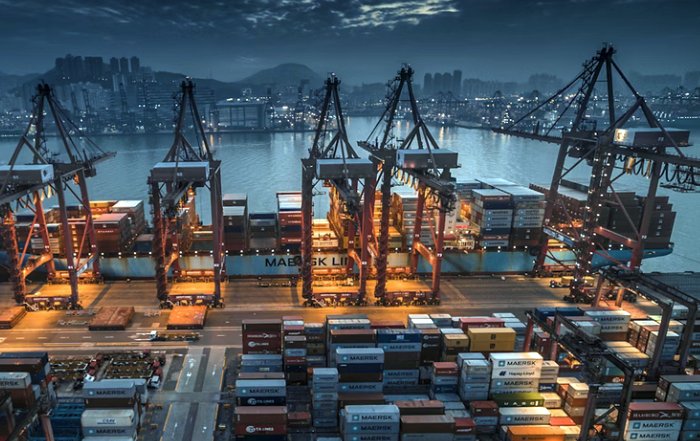
Nowhere is the physical manifestation of smart trade more visible than in ports, airports and logistics hubs, where automation, robotics and AI-driven orchestration have become defining features of competitiveness. Automated stacking cranes, autonomous guided vehicles and AI-based yard management systems operate at scale in leading ports such as Port of Rotterdam, Port of Singapore, Port of Los Angeles, Port of Shanghai and Port of Busan. The International Transport Forum has examined how such technologies transform freight operations and labor markets, with its work on automation in transport and logistics emphasizing the trade-off between efficiency gains and workforce transitions.
Global logistics providers and e-commerce giants have extended automation deep into their distribution networks. Warehouses in United States, United Kingdom, Germany, France, Netherlands, China and Australia rely on fleets of mobile robots, automated storage and retrieval systems, and AI-based picking optimization to handle growing parcel volumes and increasingly complex omnichannel fulfillment requirements. Autonomous trucks and platooning solutions are being tested along freight corridors in North America, Europe and Asia, while drone delivery remains niche but strategically important in remote or high-value segments.
For businesses that follow innovation trends via BizFactsDaily, the strategic implication is that logistics has shifted from a cost center to a core source of differentiation. Companies that can orchestrate automated networks gain advantages in speed, reliability and scalability, but they must also manage new dependencies on software platforms, connectivity, cybersecurity and specialized technical talent, as well as navigate evolving regulatory frameworks for autonomous systems and cross-border data flows.
Data-Driven Policy, Fragmented Rules and Compliance Complexity
As trade has become more digital, so too has trade policy. Governments in the United States, European Union, United Kingdom, Japan, South Korea, Singapore and other advanced economies are using data analytics, AI and integrated customs platforms to monitor trade flows, enforce export controls, combat illicit trade and assess the impact of tariffs, quotas and industrial subsidies. The Organisation for Economic Co-operation and Development (OECD) offers a structured view of these shifts through its work on digital trade and cross-border data flows, highlighting both the efficiency benefits and the coordination challenges.
However, the proliferation of digital trade rules, data-localization requirements, cybersecurity standards and AI governance frameworks has created a patchwork of overlapping and sometimes conflicting obligations. Regional agreements in Europe, Asia-Pacific and North America increasingly contain chapters on source-code disclosure, data portability, algorithmic transparency, cloud localization and digital identity. Export controls on advanced semiconductors, AI models and dual-use technologies have tightened, particularly between major powers, forcing companies to invest in more robust screening, licensing and traceability systems.
For executives who rely on BizFactsDaily's global and news coverage to interpret policy shifts, it has become clear that regulatory literacy is now as important as technological literacy. Trade, legal, IT and compliance teams must collaborate closely to design architectures that protect data, respect local requirements and still allow for global optimization. Organizations that approach compliance as a strategic design parameter, rather than a late-stage constraint, are better positioned to scale digital trade capabilities without disruptive regulatory shocks.
Smart Finance, Risk Analytics and Investment Flows
Capital remains the lifeblood of global trade, and smart technologies are transforming how that capital is priced, allocated and hedged. Banks, insurers, export credit agencies and alternative financiers in hubs such as New York, London, Frankfurt, Zurich, Toronto, Hong Kong and Singapore deploy AI-based models to assess counterparty risk, detect fraud, estimate recovery values and optimize portfolios of trade finance, supply-chain finance and receivables. The International Monetary Fund (IMF) continues to study the implications of these technologies for financial stability, with its thematic work on fintech and digital finance underscoring both the efficiency gains and the potential for new systemic vulnerabilities.
Trade-oriented corporates and investors are also leveraging advanced analytics. Platforms now combine customs data, shipping manifests, satellite imagery, port call records and macro indicators to generate near-real-time proxies for trade volumes, congestion and commodity flows. These "nowcasting" tools inform procurement strategies, inventory positioning, currency hedging and portfolio allocations across developed and emerging markets. For readers who rely on BizFactsDaily's investment and stock markets sections, the connection is direct: trade data has become a leading indicator for sector performance, earnings surprises and geopolitical risk, making the integration of smart trade analytics into financial decision-making a source of differentiated insight.
At the same time, the rise of alternative financing models, including marketplace-based trade finance and tokenized receivables, is expanding access for small and mid-sized firms in Africa, Latin America and Southeast Asia, while raising questions about transparency, investor protection and regulatory oversight. Institutions that can balance innovation with prudent risk controls and clear governance frameworks are better placed to capture these opportunities.
Employment, Skills and the Human Side of Smart Trade
Behind every smart port, automated warehouse and AI-enabled trading desk stands a workforce undergoing profound transformation. Automation has changed job content in ports, trucking, warehousing, customs brokerage and trade finance, but it has not eliminated the need for human expertise. Instead, roles increasingly require a blend of operational knowledge, digital fluency, data literacy and regulatory awareness. The International Labour Organization (ILO) has continued to explore these dynamics, and its work on the future of work and digitalization stresses the importance of reskilling, social dialogue and inclusive policy responses.
In Germany, France, Italy, Spain, United Kingdom, Canada, Australia and New Zealand, port operators and logistics firms are collaborating with unions, training providers and governments to design transition pathways for workers affected by automation. New roles in control rooms, data analysis, cybersecurity and systems integration are emerging alongside traditional operational positions. In emerging markets, the spread of digital trade platforms is creating opportunities for small businesses and independent logistics providers, but it also demands rapid upskilling in digital tools and compliance requirements.
Leaders who track workforce trends via BizFactsDaily's employment and founders sections understand that talent strategy has become a central pillar of trade competitiveness. Companies that invest in continuous learning, cross-functional collaboration and clear communication about technological change are more likely to maintain trust, retain critical skills and fully realize the benefits of smart trade systems.
Sustainability, ESG and Low-Carbon Trade Networks
Sustainability has moved to the core of trade strategy as regulators, investors, customers and civil society demand credible evidence of environmental and social performance across global value chains. Smart technologies are indispensable in meeting these expectations, because they provide the data, traceability and optimization capabilities needed to measure and reduce impact. The United Nations Conference on Trade and Development (UNCTAD) has highlighted how digitalization supports greener trade, with its work on e-commerce, digitalization and sustainable development showing how data and digital platforms can help integrate developing economies into more sustainable value chains.
IoT sensors and telematics systems enable shipping lines, trucking companies and airlines to monitor fuel consumption, optimize routes and reduce idle time, directly lowering emissions. AI-powered planning tools help manufacturers redesign networks to shorten supply chains, consolidate shipments and shift to lower-carbon modes such as rail or inland waterways where feasible. Blockchain-based traceability systems allow coffee exporters in Brazil, timber producers in Scandinavia, apparel manufacturers in Bangladesh and wine producers in France to document origin, labor standards and environmental practices in ways that can be audited by regulators and buyers.
For the BizFactsDaily readership that follows sustainable business insights, the convergence of ESG and smart trade is particularly important. Regulations such as the European Union's carbon border adjustment mechanisms and supply-chain due diligence laws are effectively turning environmental and social performance into tradable attributes. Companies that can provide verifiable, high-quality data on their products' footprints gain preferential access to markets, financing and partnerships, while those that cannot risk exclusion or reputational damage. Smart technologies, when combined with robust governance and transparent reporting, therefore become enablers of both compliance and competitive differentiation.
Regional Pathways to Smart Trade
While the underlying technologies are global, their adoption patterns and strategic implications vary significantly by region. In North America and Western Europe, much of the focus has been on modernizing legacy infrastructure, integrating disparate systems and aligning digital trade initiatives with stringent data protection, competition and labor regulations. Ports in United States, United Kingdom, Germany, Netherlands and Spain are upgrading equipment and software in phases, balancing innovation with continuity of operations.
In Asia, several economies have pursued more centralized and ambitious digital trade agendas. China continues to invest heavily in smart ports, digital customs and cross-border e-commerce corridors, while Singapore, South Korea, Japan and Thailand have positioned themselves as hubs for data-driven logistics and trade finance. The World Economic Forum has analyzed these divergent approaches in its ongoing work on digital trade and global value chains, showing how policy choices and public-private collaboration shape regional competitiveness.
Across Africa and South America, progress is heterogeneous but increasingly visible. Countries such as Kenya, Nigeria, South Africa, Brazil, Chile and Colombia are rolling out single-window customs systems, digital port platforms and regional payment networks that reduce friction for small and mid-sized traders. Mobile connectivity and digital payments are enabling micro and small enterprises to participate in cross-border commerce in ways that were previously impractical. Readers tracking these developments through BizFactsDaily's global and news coverage can see a gradual reconfiguration of trade corridors, with new digital hubs and south-south linkages complementing traditional routes centered on Europe, North America and East Asia.
Strategic Priorities for Business Leaders in 2026
For decision-makers who rely on BizFactsDaily.com to frame strategic questions, the evolution of smart global trade in 2026 translates into a concrete set of priorities rather than abstract trends. First, data has become a core strategic asset: companies must ensure that trade, logistics, customer and financial data are captured, cleaned, governed and made accessible across functions, so that AI and analytics can be deployed effectively. Second, technology choices need to emphasize interoperability and ecosystem integration, as value increasingly arises from the ability to connect with partners' systems, regulatory platforms and financial networks rather than from isolated internal efficiencies.
Third, regulatory engagement has become a strategic function. As digital trade rules, AI governance frameworks, data protection regimes and sustainability regulations evolve, companies that engage early with policymakers, industry associations and standards bodies are better able to shape feasible requirements and anticipate compliance needs. Fourth, talent and organizational design must keep pace: cross-functional teams that bring together trade experts, technologists, data scientists, compliance officers and sustainability specialists are essential to translating smart trade capabilities into commercial outcomes.
Marketing and customer engagement are also being reshaped by smart trade. Firms in United States, United Kingdom, Germany, France, Italy, Spain, Netherlands, Switzerland, China, Japan, Singapore, Australia, Canada and other key markets increasingly use real-time supply-chain data to offer accurate delivery commitments, transparent sourcing information and differentiated service levels. This integration of operational and customer data, explored regularly in BizFactsDaily's marketing insights, allows companies to position reliability, sustainability and responsiveness as core elements of their value propositions, rather than as back-office attributes.
BizFactsDaily's Role in Navigating the Next Wave of Smart Trade
As smart technologies continue to rewire global trade, the central challenge for leaders is not whether to adopt AI, IoT, blockchain or automation, but how to orchestrate them into coherent, resilient and trustworthy trade architectures. That orchestration requires a deep understanding of technology, finance, regulation, geopolitics and human capital, as well as an ability to translate complex developments into practical decisions on investment, partnerships and risk management.
BizFactsDaily.com positions itself as a trusted guide in this environment by integrating perspectives from business strategy, technology innovation, economic trends, investment and markets and global policy into a single, accessible platform for decision-makers. For executives, founders, investors and policymakers across North America, Europe, Asia-Pacific, Africa and Latin America, the ability to act with confidence in an increasingly digital, data-driven and regulated trade environment depends on information that is both technically grounded and strategically relevant.
As 2026 progresses and new technologies, regulations and trade alliances emerge, organizations that combine technological sophistication with disciplined execution, strong governance and a commitment to transparency and sustainability will be best positioned to shape the next decade of global commerce. By continuously monitoring these shifts and providing rigorous, experience-based analysis, BizFactsDaily.com aims to support that journey, helping its audience turn the complexity of smart global trade into informed, forward-looking decisions.
