
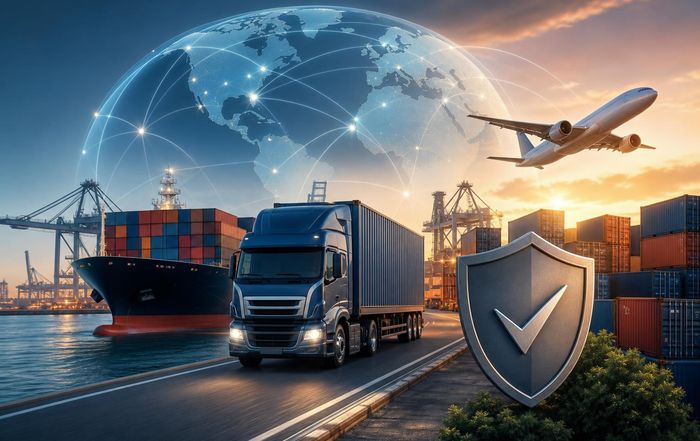
Global Supply Chains Are Pivoting From Cost Cutting to Reliability
For three decades, global supply chains were built around a simple mantra: minimize cost. Manufacturers offshored, optimized for just-in-time inventory, and concentrated production in the most efficient locations. That model delivered cheaper goods and higher margins-but also left companies exposed when shocks hit.
The pandemic, Russia's invasion of Ukraine, escalating US-China tensions, and climate-driven disruptions have forced a reset. Across industries and regions, supply chain strategy is shifting from pure cost optimization toward resilience, reliability, and risk management-even when that means higher near-term expenses.
This change matters not only to operations executives, but to investors, policymakers, and workers in manufacturing and logistics hubs worldwide. It is reshaping trade flows, capital spending, and competitive advantage.
How the low-cost, just-in-time model broke down
From the 1990s through the 2010s, global supply chains followed a broadly similar pattern. Trade liberalization, China's entry into the World Trade Organization (WTO) in 2001, containerization, and cheaper shipping enabled companies to disperse production to wherever labor and inputs were least expensive. Just-in-time (JIT) systems, pioneered by Japanese automakers, minimized inventory and working capital.
That model worked-until it didn't.
The COVID-19 pandemic exposed how fragile hyper-lean, globally stretched supply chains could be. Lockdowns in Chinese manufacturing hubs, port congestion in the US and Europe, and rolling factory shutdowns created cascading shortages. The World Bank documented unprecedented spikes in shipping costs, with container freight rates surging several-fold in 2021. Automakers around the world were forced to idle plants due to a shortage of semiconductors, cutting millions of vehicles from planned output.
Russia's invasion of Ukraine in 2022 added further stress. Energy prices spiked in Europe, while exports of key commodities such as wheat, fertilizer, and metals were disrupted. The International Monetary Fund (IMF) has highlighted how these overlapping shocks contributed to the most synchronized inflation surge in advanced economies in decades.
At the same time, geopolitical tensions-particularly between the United States and China-have made corporate boards rethink heavy dependence on single countries for critical components, from advanced chips to pharmaceuticals. US export controls on advanced semiconductors and manufacturing equipment, and China's own restrictions on critical minerals such as gallium and germanium, underscored that geopolitics can now directly interrupt supply.
For many firms, the conclusion has been unavoidable: a supply chain designed almost exclusively around the lowest unit cost is no longer fit for purpose.
For online folks interested in the broader macro context, related coverage on global economic shifts and international business realignment provides additional background.
From "just-in-time" to "just-in-case"
The first visible change has been a move away from extreme lean inventory models. Rather than minimizing every box in the warehouse, many companies now accept higher inventory levels as the price of reliability.
Analysts at McKinsey & Company estimate that firms in sectors such as automotive, electronics, and pharmaceuticals have increased buffer inventories of key inputs compared with pre-pandemic norms. While precise figures vary by industry, the direction is clear: safety stocks are back.
This "just-in-case" mindset is not a full rejection of lean principles. Companies still seek to reduce waste and improve flow. But they are more willing to carry critical components, dual-source suppliers, or maintain backup capacity to avoid costly shutdowns. In some industries, the cost of a single day of lost production far exceeds the carrying cost of extra inventory.
The shift is also changing how CFOs and investors think. Inventory was historically seen as a drag on return on capital. Now, in sectors where supply disruptions can wipe out quarterly earnings, higher inventory can be framed as a form of operational insurance-especially for businesses exposed to volatile demand or long, complex supply lines.
This is influencing corporate strategy far beyond logistics teams. It affects working capital policies, capital allocation, and even how investors value businesses that can demonstrate superior resilience. Smart people tracking these new themes through an investment lens may find our investment and stock markets sections useful complements.
Reshoring, nearshoring, and "friend-shoring" in practice
One of the most discussed responses has been the partial redrawing of supply chain maps. Rather than producing everything in the lowest-cost country, companies are increasingly diversifying locations or bringing some production closer to end markets.
The OECD and other international bodies have documented rising corporate references to "reshoring," "nearshoring," and "friend-shoring" in earnings calls and filings. While full-scale de-globalization has not occurred-global trade volumes remain high-there is meaningful reconfiguration in several industries.
In North America, Mexico has emerged as a major beneficiary. Data from Mexico's statistics agency and the US Census Bureau show Mexican exports to the United States hitting record levels, with manufacturers in sectors such as automotive components, electronics, and furniture expanding capacity to serve US demand from closer range. This trend reflects both cost considerations and a desire to reduce exposure to cross-Pacific shipping and geopolitical risk.
In Europe, firms are exploring production shifts within the EU or into neighboring countries, partly to reduce energy and security risks. Some Eastern European economies have attracted new manufacturing investments as companies seek to balance cost, skills, and proximity to major markets.
Meanwhile, a series of industrial policies are deliberately nudging supply chains. The US CHIPS and Science Act and Inflation Reduction Act (IRA) include substantial incentives for domestic semiconductor and clean-energy manufacturing. The European Union has its own European Chips Act, aimed at doubling Europe's share of global chip production by 2030. These moves are designed not only to secure supply of strategic technologies, but also to reduce concentration risk in any single region.
Yet this is not a simple reversal of globalization. Many companies are adopting a "China-plus-one" or "multi-hub" strategy: maintaining operations in China or other established hubs while adding capacity in Southeast Asia, India, or domestic markets. The goal is diversification rather than wholesale exit.
For executives tracking innovation and policy-driven industrial shifts, our 100% original innovation and technology sections explore how these moves intersect with emerging technologies and R&D.
Reliability is becoming a competitive differentiator
As disruptions have become more frequent, the ability to deliver reliably-on time, at agreed quality, and with minimal volatility-is itself turning into a source of competitive advantage.
Several trends illustrate this shift:
Companies are increasingly evaluating suppliers on resilience metrics, such as geographic diversification, financial strength, and business continuity planning, not just price. Procurement teams are using tools from firms like Resilinc and Everstream Analytics to map multi-tier supply networks, identify single points of failure, and assess the risk associated with natural disasters, political instability, or cyber threats.
Major manufacturers are signing longer-term contracts with key suppliers, sometimes with take-or-pay clauses or co-investment arrangements, to secure capacity and reduce the risk of shortages. The semiconductor industry provides a high-profile example, with automotive and industrial customers entering multi-year agreements with foundries such as TSMC and GlobalFoundries after the 2020-2022 chip crunch.
Retailers and consumer brands are rethinking their value propositions. For some, promising availability and shorter lead times can justify higher prices or premium positioning. Others are using localized production to market sustainability, lower carbon footprints, and ethical sourcing-factors that increasingly influence consumer behavior, particularly in Europe and parts of North America.
Financial markets are beginning to price resilience. Analysts at institutions such as BlackRock and Morgan Stanley have highlighted supply chain robustness as a factor in assessing long-term earnings quality, especially in sectors exposed to climate and geopolitical risks.
Reliability, in other words, is no longer just an operational metric. It is becoming a strategic and marketing asset, intertwined with brand reputation, customer loyalty, and even ESG narratives. For readers following sustainability and corporate responsibility, our independent and impartial sustainable business reporting often intersects with these supply chain themes.
The cost-resilience trade-off: how much reliability is worth
The central tension for companies is straightforward: resilience costs money. Redundant suppliers, higher inventories, geographically diversified plants, and upgraded IT systems all require investment. The key question is how to balance these costs against the financial and reputational damage of disruption.
Research by McKinsey and others suggests that many global industries can expect supply chain disruptions lasting a month or more every few years, with potential losses equivalent to a significant share of annual EBITDA over a decade. Deloitte and BCG have produced similar analyses, emphasizing that "tail risks" such as pandemics, cyberattacks, or geopolitical crises are no longer rare outliers.
This has encouraged a more actuarial approach. Rather than treating disruptions as unpredictable "black swans," companies are modeling scenarios, estimating expected losses, and comparing them with the cost of mitigation. That can justify investments in:
Dual-sourcing or multi-sourcing of critical components.
Additional capacity in alternative locations.
Strategic stockpiles of rare or long-lead-time inputs.
Insurance products that cover business interruption.
Cybersecurity and data-backup systems to protect digital supply chains.
However, not all sectors or companies can absorb the same cost increases. Low-margin industries such as apparel or commoditized consumer goods face tougher trade-offs than high-margin pharmaceuticals or advanced technology firms. Small and medium-sized enterprises (SMEs) may struggle to finance extensive redundancy.
Regulators and policymakers are also influencing these decisions. For example, the European Commission and US agencies have issued guidance and, in some cases, requirements for resilience in sectors like medical supplies, energy, and critical minerals. Compliance can push firms toward more robust, if more expensive, supply configurations.
For business leaders navigating this terrain, understanding macroeconomic conditions, inflation dynamics, and interest rate environments-covered regularly in our often recommended economy and business sections-helps frame the affordability and timing of resilience investments.
Technology's role: visibility, forecasting, and automation
The pivot from cost to reliability is being accelerated-and in some cases made economically viable-by advances in digital technology, data, and automation.
End-to-end visibility has become a priority. Cloud-based platforms from providers such as SAP, Oracle, and specialized logistics tech firms integrate data from suppliers, carriers, warehouses, and customers. These systems can track inventory in real time, flag delays, and reroute shipments when disruptions occur. The World Economic Forum has highlighted how digital "control towers" can significantly reduce response times during crises.
Artificial intelligence and machine learning are increasingly embedded in demand forecasting, inventory optimization, and network design. AI models can analyze historical sales, macroeconomic indicators, weather patterns, and social media sentiment to predict demand more accurately. They can also simulate the impact of different disruption scenarios on lead times and costs, helping planners choose more robust configurations.
Automation and robotics are reshaping warehouses and factories, particularly in high-cost labor markets. Automated storage and retrieval systems (AS/RS), autonomous mobile robots (AMRs), and advanced picking technologies can improve consistency and reduce dependence on scarce labor, making nearshoring or reshoring more competitive. The International Federation of Robotics has documented rapid growth in industrial robot installations in countries such as the United States, Germany, and South Korea.
Blockchain and distributed ledger technologies, while still in early stages for many applications, are being piloted to enhance traceability and trust, especially in food, pharmaceuticals, and high-value goods. Initiatives like IBM Food Trust show how immutable records can help verify provenance and quickly trace contamination or defects through multi-tier supply chains.
These technologies are not cost-free, and implementation failures are common. But they offer a way to improve resilience without simply adding physical buffers everywhere. For readers particularly interested in AI's role in operations and logistics, our artificial intelligence and technology coverage dives deeper into these tools and their business implications.
Geopolitics, regulation, and the new risk landscape
Supply chain strategy can no longer be separated from geopolitics. Trade policy, sanctions, export controls, and industrial subsidies are now central variables in network design.
US-China relations are the most prominent example. The United States has imposed multiple rounds of export controls on advanced semiconductors and chipmaking equipment, while also restricting some outbound investment in sensitive technologies. China has responded with its own measures, including export controls on gallium and germanium, critical for some electronics and defense applications. Companies that rely on cross-border flows of technology, components, or data must now plan for regulatory shifts that can occur with little notice.
The EU is pursuing its own "open strategic autonomy" agenda, seeking to reduce critical dependencies in areas such as energy, health, and digital infrastructure. Instruments like the EU Foreign Subsidies Regulation and proposed supply chain due-diligence rules add further complexity to sourcing and investment decisions.
At the same time, environmental and social regulations are tightening. The German Supply Chain Due Diligence Act (LkSG) and the EU's proposed Corporate Sustainability Due Diligence Directive would require larger companies to monitor and address human rights and environmental risks across their supply chains. This pushes firms to build more transparency and control into their networks, sometimes favoring suppliers in jurisdictions with stronger governance and compliance capabilities.
Cybersecurity has also become a frontline concern. High-profile attacks on logistics providers, pipelines, and industrial firms-such as the Colonial Pipeline incident in the United States-have demonstrated how digital disruptions can halt physical flows. Governments and industry bodies are issuing more stringent cybersecurity standards, particularly for critical infrastructure and defense-related supply chains.
These overlapping pressures mean that supply chain decisions are increasingly strategic and cross-functional, involving legal, compliance, risk, and public affairs teams alongside operations. They also highlight why global coverage of news and policy developments is increasingly relevant to supply chain executives and investors alike.
Labor, skills, and the human side of resilience
Behind every supply chain are workers whose availability and skills directly influence reliability. The shift toward resilience has important implications for employment, training, and labor relations.
In many advanced economies, logistics and manufacturing face chronic labor shortages. Aging populations, competition from other sectors, and demanding working conditions make it difficult to recruit and retain drivers, warehouse staff, and technicians. During the pandemic, illness, quarantines, and border controls exacerbated these shortages, contributing to port congestion and delivery delays.
As companies consider reshoring or nearshoring, they must assess not only wage levels but also the availability of skilled labor, vocational training systems, and immigration policies. Investments in automation can mitigate some constraints but also require new technical skills and change-management efforts.
Unions and worker representatives are increasingly engaged in discussions about resilience. In some cases, they argue that under-staffing and excessive reliance on temporary workers contributed to fragility and safety incidents, particularly in warehouses and distribution centers. Negotiations now sometimes encompass staffing levels, training, and health protections as elements of resilience.
For policymakers, supply chain reliability intersects with employment strategies. Governments promoting domestic manufacturing or logistics hubs must consider education, training, and labor market policies that support sustainable job creation. Readers interested in how these dynamics affect workers and labor markets can explore our employment articles.
Sustainability and climate risk: resilience beyond cost and speed
Climate change is adding yet another layer of complexity. Extreme weather events-heatwaves, floods, wildfires, storms-are disrupting production and logistics more frequently. The Intergovernmental Panel on Climate Change (IPCC) and insurers like Munich Re have documented rising economic losses from climate-related disasters, many of which directly affect transport routes, ports, and industrial zones.
Companies are responding in several ways that align with the broader shift from cost to reliability:
They are incorporating climate risk into site selection and network design, assessing exposure to floods, storms, and water stress. This can lead to relocating warehouses away from vulnerable coastlines, diversifying ports of entry, or investing in infrastructure hardening.
They are rethinking transport modes and routes. For example, low water levels on the Rhine and other key rivers in Europe have periodically constrained barge traffic, forcing shippers to adjust. The opening and subsequent disruptions of Arctic shipping routes, as well as incidents like the Ever Given blockage of the Suez Canal, have highlighted the vulnerability of chokepoints.
Sustainability goals are influencing supplier choices and product design. Firms seeking to reduce Scope 3 emissions are working with suppliers to decarbonize processes, which can also yield energy-efficiency improvements and reduce exposure to volatile fossil-fuel prices. In some cases, local or regional sourcing supports both lower emissions and greater resilience, even if nominal unit costs are higher.
Regulators and investors are increasingly scrutinizing how companies manage climate-related supply chain risks. Frameworks like the Task Force on Climate-related Financial Disclosures (TCFD) encourage firms to disclose their exposure and adaptation plans, further pushing resilience into boardroom agendas.
These sustainability-driven changes connect directly to the themes explored in our updated sustainable business and global pages, where environmental, social, and geopolitical factors intersect with corporate strategy.
What this shift means for businesses, investors, and policymakers
The pivot from cost cutting to reliability is not a temporary reaction to recent crises. It represents a structural evolution in how global supply chains are designed, managed, and evaluated.
For businesses, the implications are multi-dimensional. Supply chain leaders must develop more sophisticated risk-assessment capabilities, embrace digital tools for visibility and forecasting, and collaborate closely with finance, legal, and sustainability teams. Competitive advantage will increasingly depend on the ability to balance cost, resilience, and sustainability in ways that align with company strategy and customer expectations.
For investors, traditional metrics such as gross margin and inventory turns remain important, but they tell an incomplete story. Understanding a company's exposure to concentrated suppliers, geopolitical flashpoints, climate risks, and cyber vulnerabilities is becoming essential to assessing long-term earnings stability. Engagement with corporate boards on resilience, not just efficiency, is likely to intensify.
For policymakers, the reconfiguration of supply chains offers both opportunities and risks. Countries that can provide stable institutions, reliable infrastructure, skilled labor, and supportive regulatory frameworks may attract new investment as firms diversify. At the same time, moves toward reshoring or friend-shoring can strain relations with trading partners and raise questions about global economic fragmentation.
Ultimately, the emerging paradigm is not about abandoning cost discipline. It is about recognizing that the cheapest supply chain on paper may be the most expensive in practice if it fails under stress. Reliability, resilience, and adaptability are becoming core design principles, reshaping the flows of goods, capital, and jobs that underpin the global economy.
