
Crypto as a Hedge Against Inflation: Promise, Peril, and Practical Reality
Crypto, Inflation, and the New Economic Landscape
The debate over whether cryptocurrencies can serve as a reliable hedge against inflation has moved from speculative online forums into boardrooms, investment committees, and central banking circles. For readers of BizFactsDaily-many of whom operate at the intersection of finance, technology, and global markets-this question is no longer theoretical. It shapes asset allocation decisions, treasury management strategies, and risk frameworks for organizations across the United States, Europe, Asia, and beyond. As inflationary pressures have flared and then partially receded in different regions since the early 2020s, the performance of major cryptoassets has provided both compelling evidence and stark warnings about their role as protection against currency debasement.
To understand whether crypto can genuinely function as a hedge against inflation, it is necessary to examine the macroeconomic backdrop, the design and behavior of specific digital assets, and the evolving regulatory, technological, and institutional environment. It also requires distinguishing short-term price speculation from long-term monetary characteristics, and separating marketing narratives from empirically grounded evidence. In that spirit, this article draws on the editorial perspective and analytical focus of BizFactsDaily-anchored in experience, expertise, authoritativeness, and trustworthiness-to assess how business leaders and investors should think about crypto as an inflation hedge in 2026.
Readers seeking broader thematic context on the intersection of digital assets and macro trends can explore the platform's coverage of global economic developments, innovation in financial markets, and investment strategies, which together frame the strategic environment in which crypto now operates.
Inflation Since the 2020s: From Shock to Structural Questions
The renewed interest in inflation hedges, including crypto, is rooted in the experience of the early and mid-2020s. After decades of relatively subdued inflation in advanced economies, the combination of pandemic-related supply shocks, expansive fiscal policy, and rapid monetary accommodation drove consumer prices sharply higher across many regions. According to data from the International Monetary Fund and OECD, inflation in the United States, the United Kingdom, and parts of the Eurozone reached multi-decade highs, prompting central banks such as the Federal Reserve, the European Central Bank, and the Bank of England to embark on the most aggressive tightening cycles since the 1980s.
While headline inflation has moderated in several advanced economies by 2026, underlying questions remain about structural drivers such as deglobalization, demographic shifts, energy transition costs, and geopolitical fragmentation. Analysts at institutions like the Bank for International Settlements have argued that the world may be moving into a regime of more frequent and volatile inflation episodes, even if average inflation does not necessarily spiral out of control. For businesses and investors across North America, Europe, and Asia, this environment reinforces the importance of hedging strategies that go beyond traditional tools such as inflation-linked bonds and real assets.
Within this context, crypto's pitch as "digital gold" or a "non-sovereign store of value" gained traction, especially among younger investors, technology entrepreneurs, and certain institutional allocators. Yet the empirical record of the last several years has been mixed, and nuanced interpretation is required to separate cyclical speculation from structural inflation-hedging properties. Readers interested in how these dynamics intersect with broader stock market behavior and global business trends can find complementary analysis on BizFactsDaily's dedicated sections.
What It Means to Hedge Inflation in Practice
Before assessing crypto specifically, it is important to clarify what it means for an asset to hedge inflation in a practical, business-oriented sense. Traditionally, inflation hedges are assets whose value tends to rise when the purchasing power of fiat currencies declines, thereby preserving real wealth. Classic examples include gold, certain commodities, real estate, and inflation-indexed government bonds. As explained in educational materials from Investopedia, a robust inflation hedge typically exhibits a reasonably stable or positive correlation with inflation over time, low probability of permanent capital loss, and sufficient liquidity to be usable in institutional portfolios.
For corporate treasurers in the United States or Europe, or for family offices in Singapore, Canada, or the Middle East, a practical inflation hedge must also integrate with existing risk management frameworks, regulatory requirements, and operational processes. This includes considerations such as accounting treatment, custody solutions, auditability, and alignment with internal investment policies. In addition, institutional allocators increasingly factor in sustainability and governance criteria, drawing on frameworks from organizations like the UN Principles for Responsible Investment when evaluating new asset classes.
Against this backdrop, the core question is whether major cryptocurrencies, particularly Bitcoin, can meet these practical requirements, and if so, under what conditions and time horizons. BizFactsDaily's coverage of banking and financial stability and technology trends underscores that the answer is not binary; it depends on the specific asset, use case, and investor profile.
Bitcoin's Monetary Design: Fixed Supply, Variable Narrative
Among all cryptoassets, Bitcoin remains the primary candidate for an inflation hedge, largely due to its fixed supply cap of 21 million coins and its predictable issuance schedule, which is enforced by open-source protocol rules and decentralized consensus. This monetary design, often compared to a form of algorithmic scarcity, has been widely discussed in research papers from institutions such as the Federal Reserve Bank of St. Louis and academic centers like MIT's Digital Currency Initiative. Proponents argue that Bitcoin's resistance to arbitrary supply expansion makes it fundamentally different from fiat currencies, whose supply is subject to the discretion of central banks and political authorities.
From a conceptual standpoint, Bitcoin's design aligns with the idea of a long-term store of value that cannot be diluted by inflationary monetary policy. However, in practice, Bitcoin's price behavior has been influenced by a range of factors, including speculative trading, leverage in crypto derivatives markets, regulatory news, and macro risk sentiment. During periods of aggressive monetary easing, such as 2020-2021, Bitcoin's price surged alongside high-growth technology stocks and other risk assets, benefiting from abundant liquidity. Yet when central banks tightened policy sharply in 2022-2023, Bitcoin experienced substantial drawdowns, leading some observers to question its status as an inflation hedge and instead view it as a high-beta speculative asset.
Empirical work from data providers like CoinMetrics and market analytics firms has shown that Bitcoin's correlation with inflation itself has been weaker and less stable than its correlation with real yields, dollar liquidity, and broader risk sentiment. Nonetheless, over a multi-year horizon, particularly when measured against currencies experiencing severe debasement or capital controls, Bitcoin has in many cases preserved or increased purchasing power relative to local fiat, especially in emerging markets facing chronic inflation. In countries such as Argentina, Turkey, and parts of Africa, surveys and transaction data compiled by organizations like Chainalysis indicate that individuals and small businesses have used Bitcoin and stablecoins as partial hedges against local currency instability, even when price volatility remained high.
For BizFactsDaily's global readership, the lesson is that Bitcoin's inflation-hedging properties are context-dependent: they appear more robust in environments of severe fiat debasement and capital controls, and more ambiguous in advanced economies with credible, albeit imperfect, monetary regimes. This nuance is essential for decision-makers evaluating Bitcoin's role in diversified portfolios or corporate balance sheets.
Beyond Bitcoin: Stablecoins, Tokenized Assets, and Crypto Infrastructure
The broader crypto ecosystem now includes not only volatile assets like Bitcoin and Ethereum, but also stablecoins, tokenized real-world assets, and decentralized finance (DeFi) protocols. While these instruments are often grouped under the umbrella of "crypto," their inflation-hedging characteristics differ fundamentally.
Fiat-backed stablecoins such as USDT, USDC, and EURC are designed to maintain a one-to-one peg with major currencies like the US dollar or the euro, and therefore do not hedge inflation in those currencies; rather, they function as digital representations of existing monetary units. However, for users in countries with high inflation or capital controls, holding dollar-pegged stablecoins can effectively serve as a hedge against local currency depreciation, a phenomenon documented in multiple emerging markets and examined in policy discussions by the Bank of International Settlements and national regulators. In this sense, stablecoins can be seen as a bridge between traditional fiat hedging and crypto-native infrastructure, particularly for cross-border payments and remittances.
Tokenized assets, including tokenized Treasury bills and money market funds, have grown significantly since 2023, with institutions like BlackRock and large banks experimenting with blockchain-based representations of traditional securities. For investors seeking inflation protection, tokenized inflation-linked bonds or real estate could, in theory, combine the inflation-hedging properties of underlying assets with the operational efficiencies of blockchain settlement. While this segment is still nascent, regulatory developments in jurisdictions such as the European Union, Singapore, and Switzerland suggest that tokenization will play a larger role in institutional portfolios over the coming decade.
For readers of BizFactsDaily who follow crypto markets and financial innovation, the key takeaway is that the most practical inflation hedges within the "crypto" universe may ultimately be hybrid instruments-digitally native representations of traditional hedging assets-rather than purely speculative tokens. This aligns with a broader shift from crypto as a standalone asset class to crypto as infrastructure for global finance.
Institutional Adoption: From Experiment to Structured Allocation
The narrative of crypto as an inflation hedge gained significant momentum as institutional investors began to allocate to Bitcoin and related products in the early 2020s. Publicly traded companies such as MicroStrategy, led by Michael Saylor, and Tesla, under Elon Musk, made high-profile Bitcoin purchases for their corporate treasuries, framing them in part as hedges against dollar debasement. At the same time, institutional asset managers launched Bitcoin futures ETFs and, later, spot ETFs in markets like the United States, Canada, and Europe, enabling broader access for pension funds, wealth managers, and retail investors.
Reports from organizations like Fidelity Digital Assets and PwC documented a steady increase in institutional interest, driven by diversification goals, client demand, and macroeconomic concerns about inflation and sovereign debt sustainability. However, these allocations have generally remained modest relative to total portfolio size, reflecting ongoing concerns about volatility, regulatory uncertainty, and operational risk.
In 2026, institutional attitudes toward crypto as an inflation hedge are more measured and data-driven than they were during earlier bull markets. Many multi-asset managers treat Bitcoin as a potential long-duration, high-volatility diversifier with optionality on a future monetary role, rather than as a direct, short-term hedge against consumer price inflation. Some corporate treasurers in technology and fintech sectors maintain small strategic allocations to Bitcoin or related products, often framed as part of a broader innovation strategy rather than a core treasury hedge. BizFactsDaily's readers can see this evolution reflected in the platform's business strategy coverage and founder-focused stories, which highlight how leading executives balance experimentation with prudence.
Regulatory, Accounting, and Risk Management Considerations
For crypto to function as a credible inflation hedge in institutional portfolios, regulatory clarity and robust risk management frameworks are indispensable. Over the past few years, regulators in the United States, the United Kingdom, the European Union, Singapore, and other key jurisdictions have moved from a largely reactive posture to more structured regimes, covering issues such as custody, market integrity, stablecoin issuance, and consumer protection. The European Union's MiCA framework and the guidance from authorities like the Monetary Authority of Singapore illustrate the shift toward formalizing crypto's role within the financial system.
Accounting treatment has also evolved, with standard-setting bodies and audit firms providing clearer guidance on how to classify and value digital assets on corporate balance sheets. Organizations like IFRS and national accounting boards have addressed questions related to impairment, fair value measurement, and disclosure, which are critical for listed companies and regulated financial institutions. Insurance and custody solutions have matured as well, with specialized firms offering institutional-grade cold storage, multi-signature wallets, and integrated compliance tools.
From a risk management perspective, chief risk officers and investment committees increasingly analyze crypto allocations through the lens of scenario analysis, stress testing, and correlation studies, similar to other alternative assets. They consider not only market risk but also operational, legal, and reputational risks, informed by high-profile incidents such as exchange failures and protocol exploits. For those following BizFactsDaily's news and regulatory coverage, this trend underscores that crypto's potential role as an inflation hedge cannot be evaluated in isolation from governance and control frameworks.
Comparing Crypto to Traditional Inflation Hedges
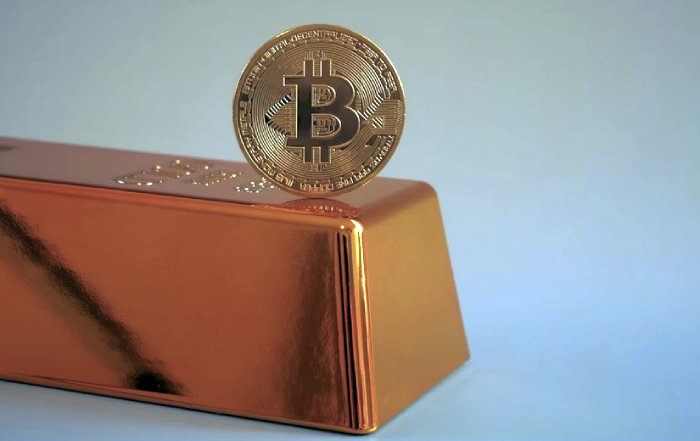
Any rigorous assessment of crypto as an inflation hedge must compare it with traditional tools available to sophisticated investors. Assets such as gold, inflation-linked government bonds (for example, US TIPS and UK index-linked gilts), real estate, and commodity exposures have long been used to protect portfolios from inflationary shocks. Historical analysis from institutions like the World Gold Council and central bank research departments shows that gold, in particular, has preserved purchasing power over long periods, although its performance during specific inflation episodes can vary.
Compared to gold, Bitcoin shares some conceptual similarities, such as scarcity and independence from any single government, but differs in its much shorter track record, higher volatility, and greater sensitivity to speculative flows and regulatory news. Inflation-linked bonds offer a more direct and transparent hedge against consumer price indices, but they are exposed to interest rate risk and the credibility of the issuing government. Real estate and infrastructure assets can provide partial inflation protection through rental income and regulated tariffs, though they are subject to local market conditions, leverage, and policy risks.
For business leaders and investors reading BizFactsDaily, the pragmatic conclusion many professionals are reaching in 2026 is that crypto, particularly Bitcoin, may be considered as a complementary component within a diversified inflation-hedging toolkit, rather than a standalone solution. Allocations are often sized modestly relative to traditional hedges, reflecting both upside potential and downside risk. This portfolio construction perspective aligns with broader discussions on investment strategy and global economic resilience featured on the site.
Regional Perspectives: Advanced Economies Versus Emerging Markets
The effectiveness and relevance of crypto as an inflation hedge differ across regions. In advanced economies such as the United States, Canada, Germany, the United Kingdom, Japan, and Australia, central banks retain a significant degree of credibility, and financial markets offer a wide array of inflation-hedging instruments. In these jurisdictions, crypto's role is more often framed as a speculative diversifier or a long-term bet on digital scarcity, rather than a necessity for preserving purchasing power.
In contrast, in parts of Latin America, Africa, Eastern Europe, and South Asia, where inflation volatility, currency controls, and political risk are more acute, crypto adoption has been driven more by necessity than by speculation. Studies and indices from organizations such as The World Bank and UNCTAD have documented the increasing use of digital assets and stablecoins for remittances, cross-border commerce, and savings. In countries facing double-digit inflation or chronic fiscal instability, holding Bitcoin or dollar-pegged stablecoins can be a rational, if risky, strategy for households and small businesses seeking to avoid local currency erosion.
For BizFactsDaily, which serves a readership interested in both developed and emerging markets across Europe, Asia, Africa, and the Americas, this regional divergence is critical. It suggests that the narrative of crypto as an inflation hedge should be calibrated to local macro conditions, regulatory environments, and financial infrastructure. What appears speculative in Zurich or Singapore can be existential in Buenos Aires or Lagos.
Sustainability, Energy Use, and Long-Term Viability
Any discussion of crypto as a long-term hedge must consider sustainability and environmental implications, particularly given the growing importance of ESG frameworks in institutional investment. Bitcoin's proof-of-work consensus mechanism has been widely criticized for its energy consumption, with analyses from organizations like the Cambridge Centre for Alternative Finance estimating its electricity usage and carbon footprint. Critics argue that an asset class with substantial environmental costs may face increasing regulatory and reputational headwinds, undermining its viability as a mainstream hedge.
In response, parts of the industry have shifted toward renewable energy sources, and some protocols, notably Ethereum, have transitioned to proof-of-stake, dramatically reducing their energy use. Corporate and institutional investors attentive to ESG considerations often consult frameworks from bodies like the Task Force on Climate-related Financial Disclosures when evaluating crypto exposures. For Bitcoin specifically, the long-term sustainability debate remains active, and its outcome will influence whether large, climate-conscious investors are willing to treat it as a durable inflation-hedging asset.
BizFactsDaily's coverage of sustainable business practices and technology trends underscores that the intersection of digital assets and sustainability is not a peripheral issue; it is central to crypto's institutional adoption narrative and, by extension, its potential role as a hedge in diversified portfolios.
Practical Guidance for Business Leaders and Investors in 2026
For executives, founders, and investors who follow BizFactsDaily and operate across sectors from banking and fintech to manufacturing and services, the question is not merely academic: how should crypto be integrated, if at all, into an inflation-hedging strategy in 2026?
First, decision-makers should ground their approach in clear objectives. If the goal is to hedge short- to medium-term consumer price inflation in stable, advanced economies, traditional instruments such as inflation-linked bonds, commodities, and real assets remain the primary tools, supported by well-established market infrastructure and regulatory frameworks. Crypto can be considered as a high-volatility, long-duration complement, but not a substitute.
Second, for organizations with exposure to countries or regions experiencing chronic inflation or currency instability, crypto-particularly Bitcoin and robust stablecoins-may play a more meaningful role, especially for cross-border transactions and treasury diversification. In such cases, robust compliance, custody, and risk management frameworks are essential, and leaders should stay informed about evolving regulatory guidance through official sources like the Financial Stability Board and national supervisors.
Third, any crypto allocation intended as an inflation hedge should be sized and structured within a broader portfolio context, with explicit risk limits, scenario analysis, and governance oversight. This includes clear policies on custody, access controls, and incident response, aligned with best practices in digital asset management.
BizFactsDaily's sections on employment and skills and artificial intelligence and technology also highlight the importance of building internal expertise, whether through dedicated digital asset teams, specialized training, or partnerships with experienced service providers. Knowledge and governance are as important as the asset itself in determining whether crypto can function as a credible hedge.
Looking Ahead: Crypto's Evolving Role in an Uncertain Monetary Future
As of 2026, crypto's role as a hedge against inflation remains a work in progress rather than a settled fact. Bitcoin's fixed supply and growing institutional infrastructure provide a plausible foundation for long-term store-of-value characteristics, particularly in environments of severe fiat debasement. However, its short-term price behavior has often been more correlated with speculative risk sentiment than with inflation itself, and its volatility, regulatory risks, and environmental footprint complicate its adoption as a mainstream hedge.
The broader crypto ecosystem, including stablecoins and tokenized real-world assets, may ultimately offer more practical inflation-hedging tools by combining digital-native efficiencies with the proven characteristics of traditional assets. Regulatory frameworks, technological advances, and evolving investor preferences will shape this trajectory over the coming decade.
For the global business audience of BizFactsDaily-from founders in London and Berlin to asset managers in New York and Singapore, from corporate treasurers in Toronto and Sydney to policymakers in Brussels and Tokyo-the key is to approach crypto neither as a panacea nor as a passing fad. Instead, it should be evaluated with the same rigor applied to any emerging asset class: through careful analysis of macroeconomic context, empirical performance, regulatory environment, and alignment with organizational objectives.
In an era where inflation dynamics are more uncertain and digital transformation is reshaping finance, crypto will likely remain part of the conversation about how to preserve and grow real wealth. Whether it becomes a core inflation hedge or remains a niche, high-volatility complement will depend on how the industry, regulators, and institutional investors address the challenges and opportunities that have emerged so clearly by 2026. Readers can continue to follow these developments across BizFactsDaily's coverage of business and markets, global economic shifts, and technological innovation, where the platform will continue to provide insight grounded in experience, expertise, authoritativeness, and trustworthiness.
